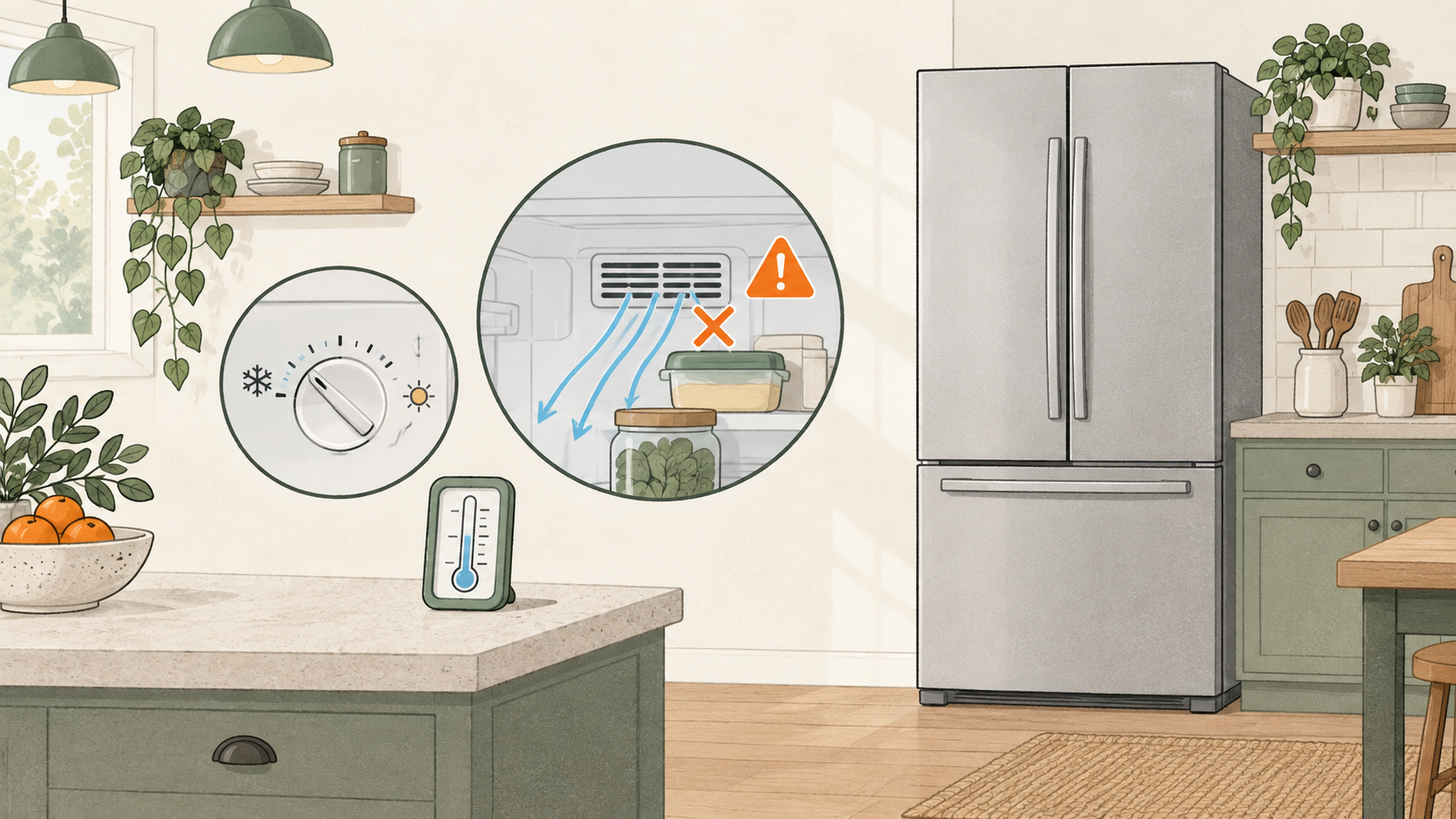
Warm refrigerator sides do not automatically mean the cooling system has failed. Some refrigerators release heat through the cabinet walls, door frame or air leaving the lower or rear area. But a warm outside surface also does not prove the food inside is cold. Check the compartment temperature separately; that is the number that tells you whether this is only a warm cabinet or a real cooling problem.
First, identify where the heat is coming from
Feel only the outside surfaces. Do not pull the refrigerator away from the wall while it is powered, remove a cover or reach underneath it.
Warmth along a side wall can be part of how a refrigerator gives off heat. A warm strip where the doors meet can have a different explanation: some designs warm that frame area to reduce moisture forming around the seal. Warm air near the bottom or rear can also be part of normal operation on some designs. These are different locations, so “the fridge is hot” by itself is too vague to guide the next step.
Notice the pattern instead: Is the heat along both side walls, concentrated around the door frame, or coming out near the lower back? Has it been running longer after a restart, a large grocery load or frequent door openings? Those details help you describe what you feel without turning touch into a diagnosis.
Then check whether the food compartments are actually warm
Use an appliance thermometer in the refrigerator compartment. If you can, check the freezer separately too. A warm cabinet and a warm compartment are not the same observation.
If the inside temperature is holding where it should, the outside warmth may be an operating feature. If the refrigerator compartment is warm, use the temperature reading and the affected compartment to continue with the broader refrigerator-not-cooling checks. The outer cabinet cannot tell you whether cold air is reaching the shelves, and it cannot identify a failed part.
Keep the doors closed while you compare readings. If a recent restart or warm grocery load explains why the cabinet feels warmer, watch the inside temperature trend rather than repeatedly changing settings. A falling temperature is useful information; a warm side panel is not a substitute for that measurement.
When warmth is more noticeable
The cabinet may feel warmer when the refrigerator is working harder—for example, after a restart, after warm food is added, during frequent door openings or in a hot room. On some models the area around the door frame is deliberately warmed to limit condensation. The exact warm zones and operating behavior vary by design.
That difference matters. A warm strip at the door seam does not mean the whole refrigerator is overheating. A warm side wall does not prove cooling is effective. A warm interior still deserves an interior temperature check, even if the outside warmth has a normal explanation.
Use the manual for clearance and cleaning
If the outside continues to feel unusually hot, check the installation and cleaning instructions for your exact model. Required wall clearance, condenser location and owner-cleaning steps differ. Do not apply a distance or cleaning schedule from another refrigerator as a universal rule.
Only clean a user-accessible area if the manual describes it as an owner task. Do not remove the rear service cover, touch a fan or work on wiring or sealed tubing. If the compartment stays warm after the checks the manual permits, arrange manufacturer support or qualified service.
What the observation can—and cannot—tell you
| What you notice | What it may mean | What it cannot prove | Next step |
|---|---|---|---|
| Warm side walls while the inside temperature is steady | The cabinet may be releasing heat during normal operation | That every refrigerator should feel the same | Compare with your model manual and keep an eye on the measured compartment temperature |
| Warmth concentrated at the door seam | A design may warm this area to limit condensation | That cooling is working correctly | Measure the compartments; check the manual if the warmth is persistent or unusual |
| Warm air near the bottom or rear | Some refrigerator designs discharge heat in these areas | That the compressor or another part is healthy | Keep required clearance and use only the manual's owner-cleaning steps |
| Hot cabinet and warm food | The outside warmth does not explain away the cooling symptom | Which internal part has failed | Protect the food and follow the broader cooling checks |
When to stop
Stop and arrange service if the inside temperature remains too warm, the refrigerator repeatedly trips a breaker, you smell burning or you would need to open a panel to continue. Keep hands away from fans and wiring. If food safety is uncertain, use the food-safety guidance linked from the main cooling article while you arrange help.
The useful distinction is simple: cabinet warmth describes where heat is leaving; a thermometer describes whether the compartments are cold. You need both observations to understand what is happening.
FAQ
Are refrigerator sides supposed to feel warm?
They can. Some designs release heat through the side walls or door frame. Check your own manual for the expected warm areas and clearances.
Does a hot side mean the refrigerator is cooling normally?
No. It only tells you that the outside feels warm. Measure the compartments; a warm cabinet does not confirm a safe food temperature.
Should I clean the coils because the sides feel hot?
Not automatically. Look up the cleaning procedure for your exact model and follow it only if the manual identifies it as an owner task. Do not remove a service cover.
What if the cabinet is warm and the refrigerator is not?
Treat the interior reading as the important clue. Continue with the main refrigerator cooling checks and contact support if the allowed checks do not explain the warm compartment.