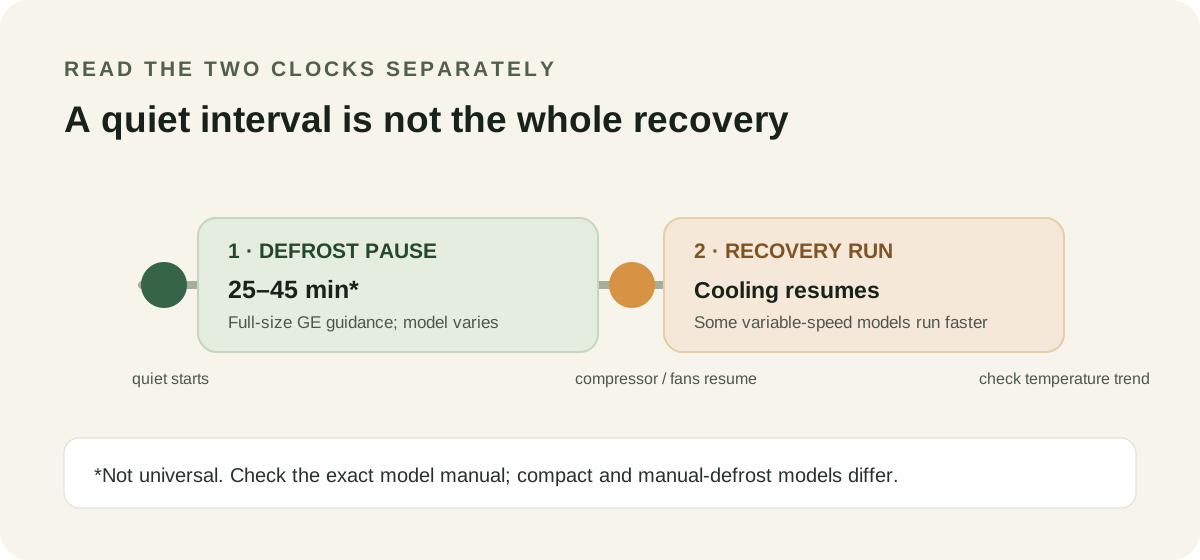
A short pause in cooling can be normal during automatic defrost on some frost-free refrigerators. For full-size GE refrigerators, the defrost period is usually 25–45 minutes, but the exact interval varies by model. The pause itself and the run afterward are separate events: record when the quiet period starts and ends, then note how the refrigerator behaves as cooling resumes. Do not apply that timing to every brand or to compact and manual-defrost models.
There are two different clocks
The first clock is the defrost interval. On full-size GE models, a heater melts frost from the evaporator while the compressor and fans stop. The usual interval is 25–45 minutes. The number describes that model family’s defrost period; it is not a universal timer for every refrigerator.
The second clock begins after defrost ends. Some variable-speed refrigerators may run faster afterward while returning to their temperature target. That recovery run is not part of the defrost interval. If you combine both periods and call the whole stretch “the defrost,” you can mistake a longer recovery run for a defrost cycle that is lasting too long.
Keep the distinction simple: quiet period, then recovery run. Track them separately.
Check which kind of refrigerator you have
Treat 25–45 minutes as a full-size GE range only; it should not be carried over to a compact refrigerator. Compact models may use manual or partial-automatic defrost instead of a full-size frost-free heater cycle. Some cycle-defrost designs also behave differently from a frost-free freezer system.
Use the exact model’s owner manual to identify its defrost design. If the manual gives a different timing or says the appliance needs manual defrosting, follow that model-specific instruction. Do not switch off or unplug the refrigerator just to try to trigger a cycle.
What a real timeline can—and cannot—tell you
One older GE refrigerator, about 20 years old, had a roughly 25–30-minute defrost period followed by as much as an hour of running. Its freezer was about three-quarters full and its refrigerator about half full; the coils were clean, the door gaskets had been checked, and both fans were working. Ice cream near the door softened, while frozen juice concentrate stayed frozen. No exact model or thermometer reading was given, so this is one observed timeline—not a factory interval or a prediction for your refrigerator.
That sequence shows why the timing matters. A half-hour defrost followed by a longer run does not mean the defrost itself lasted an hour and a half. It also does not settle whether the refrigerator was recovering normally: without a model number and measured compartment temperatures, the soft ice cream and still-frozen concentrate do not answer that. The actual temperature trend matters.
Record the next pause without opening the cabinet
If the refrigerator is temporarily quiet, write down the time the pause begins. Note whether the compressor and fans are quiet, whether you hear light dripping or sizzling, and when normal cooling sounds return. Then record the refrigerator and freezer temperatures with an appliance thermometer.
Do not remove an inside panel to watch the evaporator, touch a heater, or test a fan. You only need the outside timeline and the temperatures. If the display has an alert, record the exact wording instead of clearing it first.
| What you observe | What it may fit | What it cannot prove | Next step |
|---|---|---|---|
| Compressor and fans pause for about 25–45 minutes on a full-size GE frost-free model | The usual automatic defrost interval for that model family | That the same range applies to another model or brand | Compare the exact model manual and note when cooling resumes |
| The refrigerator runs faster after a quiet period | A recovery run on some variable-speed models | That defrost has lasted as long as the entire run | Record the pause and later run as separate times |
| A compact refrigerator develops frost or cycles off | Manual, partial-automatic, or cycle-defrost behavior may apply | That it uses the full-size frost-free heater cycle | Follow its exact defrost instructions |
| The quiet period is followed by persistent warmth or returning heavy frost | The cooling problem may need model-specific service evaluation | Which internal part has failed | Record temperatures and contact manufacturer support |
When the pause stops being a useful explanation
If a brief pause ends and temperatures remain stable, compare the observed pattern with the model manual. If the compartments continue warming, heavy frost returns, or the refrigerator appears to defrost too often, do not keep resetting it or repeatedly waiting through another cycle. Those signs call for manufacturer support or a qualified appliance technician.
Stop immediately if you smell burning, see damaged wiring, find water near an outlet, or would need to remove a cover to keep checking. The defrost heater, wiring, fan area, and sealed cooling system are not owner inspection points.
FAQ
Is it normal for a refrigerator to stop making noise during defrost?
On some automatic-defrost models, yes. The compressor and fans can pause during the cycle. Whether that fits your refrigerator depends on its defrost design and exact model.
Does the 25–45-minute range apply to every refrigerator?
No. It is a model-scoped range for full-size GE refrigerator guidance. Compact, manual-defrost, partial-automatic, and other cycle designs can work differently.
Why does my refrigerator run harder after defrost?
Some variable-speed models may run faster after defrost as cooling resumes. Treat the post-cycle run as a separate interval and check measured temperatures rather than assuming it extends the defrost timer.
A pause ended, but the refrigerator is still warm. Should I wait through another cycle?
First check the actual refrigerator and freezer temperatures and compare the timing with the exact manual. If temperatures keep rising, heavy frost returns, or the pause repeats unusually often, contact support instead of repeatedly unplugging the appliance.