If your refrigerator is not cooling until you unplug it, then warms up again, the restart has not established a lasting repair. Record how long power was off, how long cooling lasted, and what stopped when warmth returned. A brief power cycle and a long thaw can change different conditions. Neither result, by itself, tells you to buy a control board, thermostat or compressor.
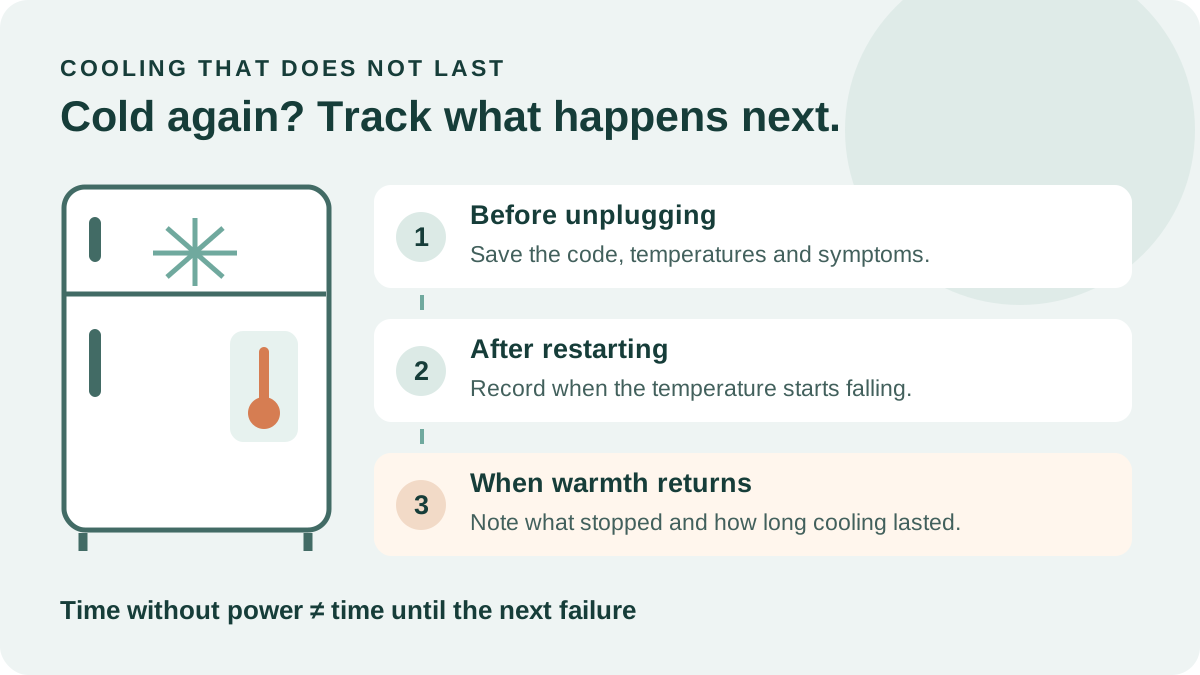
Before another reset, photograph any error code and measure both compartments. Some electronic refrigerators lose diagnostic history when reset. Move perishable food to reliable cold storage at 40°F (4°C) or below while the refrigerator is unreliable; cooling down again does not establish that previously warm food is safe.
Cooling returned before the next service visit
A Maytag MBF2256HES stopped cooling in both sections. It was unplugged before a service visit, and the technician said he could not investigate it in that state. Once reconnected, it cooled again. The second appointment was canceled—but within a few days, the compartments were warming again. The next observation was a recurring click followed by a buzzing start attempt.
That sequence leaves two different problems to solve: a recurring cooling failure and a failure that may disappear before the technician sees it. The restart did not establish a successful repair, and the sound did not settle which part had failed.
If service is booked, ask how they want the refrigerator left before arrival. Keep photographs, temperatures and a recording of the sound. Electrical warning signs take priority: do not leave unsafe equipment running just to preserve a symptom.
A day switched off helped, but cleaning did not stop the recurrence
A garage refrigerator with a bottom freezer kept its lights and freezer working while the fresh-food compartment warmed. After 24 hours unplugged, it worked again for roughly two weeks. During the next shutdown, the owner cleaned underneath and behind it and left more space at the wall. It recovered again, but the problem returned about a week later and then repeated.
Those intervals belong to that Kenmore's history; they are not a defrost prescription. More clearance and cleaning did not produce a lasting result in that case. Nor does the shorter recovery interval prove that a particular component was deteriorating.
Tell the repairer whether the freezer stayed cold and whether a longer shutdown was needed each time. If only the fresh-food side warms, the cold-freezer, warm-refrigerator checks help separate that pattern from both sections losing cooling.
The same restart eventually stopped working
On a GE GDSC0KCXARBB, cleaning a dirty rear area and reconnecting power initially brought cooling back. The next day it failed again; another restart helped. After several weeks, the problem returned once more. This time the lights and digital temperature controls still worked, but there was no blower activity. Unplugging and reconnecting no longer seemed to restore operation, so the contents were moved to another refrigerator. Later, it became cold again without a confirmed repair.
That later recovery matters. It prevents a confident claim that the most recent plug-in action immediately fixed the fault. A useful record would say both: the previous resets appeared effective, but this attempt did not bring the same immediate response. There was no confirmed failed part in this history.
Cutting power failed; a control change was followed by a restart
Another refrigerator had warm compartments, working lights and no fan or cooling sounds. It restarted on its own, ran for three days, then stayed quiet overnight after an apparent defrost period. A two-minute power interruption did not restore cooling. Moving the temperature setting from its warmest position to its coldest was then followed by a restart.
The contrast is useful: two actions did not produce the same result. It does not confirm a defective thermostat or defrost control, and it is not a control sequence to copy. The problem recurred afterward; no completed repair was established.
If you have already adjusted a control, write down what changed and when. Avoid combining several adjustments into “I reset it.” That loses the distinction between a display responding, a fan starting and the measured temperature actually falling.
Thawing stopped the fan noise; a separate test identified the repair
A GE GNE25JYKFFS had ice buildup and a freezer fan whose speed repeatedly rose and fell. Thawing brought normal operation back, but about two weeks later the ice and fan behavior returned. In that repair, testing found that the defrost relay clicked without delivering power through its contacts. A replacement board restored the heater output, and normal operation was reported afterward.
The successful thaw and the later repair answered different questions. Thawing relieved the immediate condition; the electrical test supplied the evidence for that unit's board repair. The fan sound alone would not have justified replacing the fan. Neither would a restart alone have justified replacing the board.
Leave internal inspection and electrical tests to qualified service. For a brief quiet spell without persistent warming, compare the separate explanation of automatic defrost pauses before treating every pause as a failure.
Keep one record across the next recurrence
You do not need another deliberate shutdown to collect useful information. While the appliance is safe to operate, note the ordinary observations below and follow the exact model's support instructions.
| Stage | What to preserve |
|---|---|
| Before power was removed | Both measured temperatures, the displayed message, and which sounds or airflow had stopped |
| While it was off | Duration, whether doors were open, and any cleaning or other action performed at the same time |
| After power returned | When running sounds resumed and when measured temperatures began falling—these can be separate moments |
| At the next warm spell | Which compartment warmed first, whether frost or the original noise returned, and whether the previous reset response changed |
Keep the unsuccessful attempt in the record. A failed brief restart followed by a longer recovery is different from a repeated immediate restart; a thaw followed by returning frost adds another detail. Giving service that complete sequence is more useful than canceling the visit because the refrigerator happens to be cold again today.