If your refrigerator is not cooling after a door gasket replacement, check whether the new seal contacts the cabinet, whether the door closes without catching, and whether the temperature is actually falling. A poor fit can admit warm air, but a successful paper test does not prove cooling has recovered. If the appliance was already warm before the repair, replacing its gasket may leave another cooling problem unresolved.
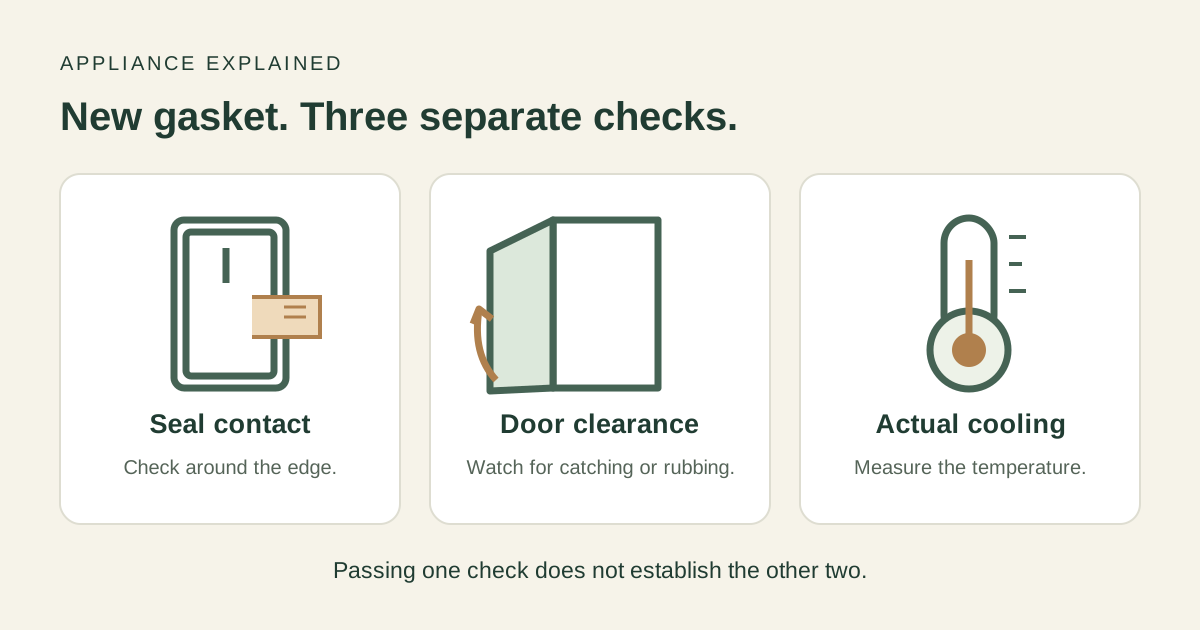
Start with what changed during the job. Keep perishable food in suitable cold storage while you investigate; a new seal is not evidence that food stayed safe. The food-safety check applies while the refrigerator is recovering, too.
Check the seal without treating it as the whole diagnosis
Close the door on a strip of paper and gently pull. Some resistance indicates contact at that location. Paper that slips out easily identifies a place to inspect for dirt, distortion or a gap. Check around the perimeter, including the corners, rather than testing only beside the handle.
Before adjusting anything, make sure a shelf, drawer or package is not holding the door open. Clean dirty contact surfaces with mild dish soap and a damp cloth. If a section of the new gasket is loose or misshapen, have its fit checked against the exact replacement part and attachment design.
Then measure the compartment temperature with an appliance thermometer. Keep that result separate from the paper test.
In one French-door refrigerator, a temperature alarm appeared a few hours after the gaskets were replaced. The owner checked the folding center seal and its connection, confirmed that the interior light went out when the door closed, and reported that the new gasket passed the dollar-bill test. The refrigerator was still warm. No completed repair was confirmed.
That combination matters. The paper test and light response were encouraging observations, but neither established why cooling had changed. Ice buildup was suggested; it was not demonstrated. A shorted component was also speculation. Neither should become a reason to order a part for your refrigerator.
If cooling improved briefly, include the thaw in the repair history
A replacement followed by a cold spell can look like a successful repair. What else happened during the same visit?
One built-in, bottom-freezer refrigerator had a cold freezer and a warm fresh-food compartment. An earlier repair included thawing ice in the freezer; the fresh-food section cooled for about two days, then warmed again. At the next visit, the freezer gasket was replaced and the ice was thawed again. The owner reported another cooling period of about two days, followed by the same warm-fridge problem.
Those are reported intervals from one appliance, not a normal recovery schedule. The first replaced component was described too unclearly to identify, so it cannot supply a reliable parts diagnosis.
The useful inference is narrower: both visits included thawing, and neither produced a lasting recovery. That history does not isolate the gasket's effect from the thaw's effect. It also does not prove a particular defrost component failed. Tell the technician about both interventions and both returns of the symptom, instead of reporting only that the new gasket worked and then failed.
If the freezer stays cold while the refrigerator warms again, continue with the compartment airflow checks. Do not buy another gasket solely because the same temperature problem returned.
A tight seal can still rub when the door moves
Inspect the closed position and the closing movement separately. Look for a fold that catches or hardware that touches the new gasket. Stop forcing the door if it binds.
In an older refrigerator with a screw-retained inner door liner, fitting the replacement gasket initially left several gaps. After further fitting and shaping, the owner reported that the door closed and sealed tightly. The upper hinge was then adjusted for clearance, yet slight contact with the middle hinge remained. No temperature measurements accompanied that result.
This was a sealing improvement with a remaining clearance concern. It was not proof of cooling recovery or proof that every part of the installation was correct. The screw-retained construction also matters: its fitting sequence cannot be copied onto a different gasket attachment system.
If your installer has finished the job, show them where the gasket touches during movement as well as where it seals when closed. Ask them to check the installation for that door design. Hinge adjustment and door removal need the correct procedure and support for the door's weight.
Heating the gasket is not a universal next step
A new gasket may arrive folded, but repeated heating is not a substitute for establishing that it is the right part and is installed correctly. Use only the conditioning method specified for that replacement; do not improvise with a heat gun, an oven or another appliance.
One commercial freezer installer reported that a hot-water soak and a hair dryer had not corrected a new gasket's poor contact with the frame. Another participant questioned whether it was seated fully; the installer said the corners were seated. No successful correction was confirmed.
That commercial example supplies no heating instructions for a household refrigerator. It does show why “I already warmed it” is an attempted remedy, not a verified fit. A visible gap that remains needs inspection, rather than an assumption that more heat will solve it.
Decide whether the next check concerns installation or cooling
Use the result that is still unresolved:
| What remains after replacement | Next question to settle |
|---|---|
| Paper slips out at one section | Is that section clean, correctly seated and making contact? |
| The door seals when shut but catches during movement | Is the gasket clearing the door hardware throughout the closing path? |
| Contact looks even, but the measured temperature stays high | Has cooling actually resumed, and is one compartment affected or both? |
| Cooling returned after a repair that also included thawing, then failed again | What changed during each intervention, and which effect lasted? |
Keep the next observation simple: where the gap or contact occurs, or how the temperature changes with the doors kept closed. Avoid repeatedly altering settings or reopening the door to feel the air. Recovery time depends on the appliance and what happened during the work; there is no single waiting period specific to every gasket replacement.
If the fit remains wrong, return to the installation. If the fit is sound and the appliance remains warm, return to the cooling diagnosis. The job is finished when the door works correctly and the refrigerator maintains the required temperature, not merely when the replacement gasket is in place.