If your refrigerator is not cooling after its doors were removed, check whether the doors both close properly and register as closed. Clear anything obstructing them. If a door-open alarm or abnormal light remains after reassembly, ask the installer to check the door connections and sensing components for your exact model. Then verify cooling separately: fixing door recognition does not establish that the refrigerator is cold enough.
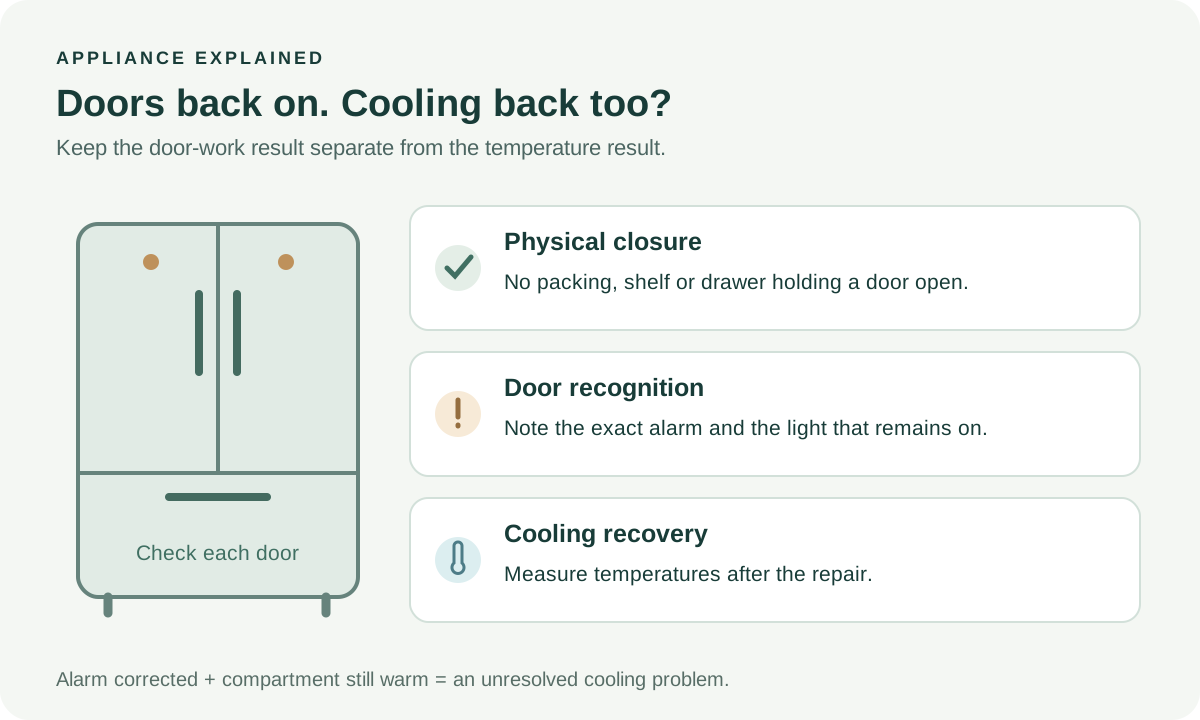
Use an appliance thermometer to check the compartments; the selected display temperature is not a measurement of the food's temperature. Keep perishables in reliable cold storage while cooling remains unresolved.
The freezer registers closed, but the upper doors do not
On an LG LFXS28596S, the doors and hinges were removed to get a new refrigerator into the house. Once it was reassembled, the freezer door registered open and closed, but the upper doors did not. The upper lights stayed on and the alarm continued.
Checking the visible connections and repositioning the door sensors did not resolve it. There was no displayed error code, and an app diagnostic returned an apparently normal result. A later check found a frayed wire in the upper-right door harness.
That sequence gives the installer a more useful starting point than “the refrigerator keeps beeping.” If different doors produce different responses, identify which one behaves normally and which one does not. An apparently clean diagnostic result had not ruled out the wiring problem in this instance.
The upper-right location belongs to this model and this incident. It is not a universal place to start pulling wires. Door layouts and connections vary, and a loose connector, damaged wire and displaced sensing component need different corrections.
Door recognition returns, but cooling still does not
The same LFXS28596S had a second, unfinished problem. Restoring the damaged wire connection made door recognition work again, yet the refrigerator still did not get adequately cold. The appliance was eventually returned. The remaining cooling fault was not established.
This distinction is easy to lose during a callback. A technician might demonstrate that the light now goes out or the alarm no longer sounds. That establishes an improvement in door recognition; the temperature still needs its own follow-up.
If this happens to yours, describe the change precisely: “The door warning is corrected, but the refrigerator compartment is still warm.” Give the measured temperatures and how long the unit has been running since the work. Do not describe a persistent warm compartment as fixed merely because the original alarm stopped.
The wire repair in that incident is not a home repair instruction. Have the installer or a qualified technician handle damaged wiring, with the appliance disconnected from power.
An alarm after delivery does not prove that cooling failed
An LG LHFS28XBS showed the opposite combination after its doors were removed for delivery. The alarm kept sounding, but the appliance was maintaining temperature. The door seals, packing material and leveling were checked. A recording showed the interior refrigerator light turning off when the doors closed, while a light underneath a door remained on.
The service visit did not establish a fix, and a replacement was arranged. Temporarily suppressing the sound had not resolved the underlying problem.
For a similar installation, record exactly which light remains on and whether either compartment is actually warm. “The fridge light stays on” can leave out the crucial location. A photograph of an exterior light and a temperature reading tell the installer different things; neither should stand in for the other.
Do not use this example to diagnose a particular switch or a disconnected plug from a photograph. The failed component in that appliance was never confirmed.
A responsive light is only part of the picture
In another door-alarm investigation, both compartments continued cooling. Removing the freezer drawers to exclude an obstruction did not stop the alarm. Power interruptions did not clear it either.
The interior light could be made to switch off during a magnetic-sensor check, yet the alarm continued. A visible wiring inspection did not reveal the cause, and no final repair was established. This appliance was not confirmed to have just undergone door removal, so it cannot prove a delivery-related fault.
It does illustrate a useful limit: one successful light response did not settle the whole door-alarm problem. If your installer has checked a light or switch, ask whether the persistent alarm was also reproduced and resolved. Do not bypass sensors or disconnect wiring to imitate that investigation.
Separate door work from the transport timeline
One moved refrigerator had its doors removed and also spent time horizontal during the move. It was fully reassembled before power was connected. The freezer began to feel colder, but the refrigerator did not; display mode was checked and ruled out. After a longer unplugged rest, cooling returned.
The exact model was not established, so that recovery does not supply a waiting period for your appliance. It also does not show that a door connection was repaired. Describe both events separately: how it was transported, and what happened when the doors were reinstalled.
Use your model's transport instructions for the rest period. The checks after moving a refrigerator cover that timeline in more detail. A persistent false door-open indication still needs attention rather than being explained away as transport recovery.
What to have the installer verify
Door removal can involve electrical connections on either side, and the number of connectors varies by model. Reassembly therefore needs more than a visual check that the doors hang straight. Leave hinge covers, wiring and sensor positioning to the installer; these checks require the correct procedure and a disconnected power supply.
For the return visit, keep the observations in separate columns:
| After reassembly | What to record | What still needs verification |
|---|---|---|
| Upper doors behave differently from the freezer door | Which opening changes the light or warning | Correct recognition of each affected door |
| An alarm continues while temperatures remain normal | Light location and actual compartment temperatures | The alarm fault, without assuming cooling has also failed |
| The door indication is corrected but a compartment stays warm | What changed during the repair and what did not | Cooling recovery after the door work |
| The appliance was also tilted during the move | Transport position and the power-on timeline | The model-specific transport procedure, separately from door reassembly |
Ask the installer to record both the door-recognition result and the cooling follow-up on the service ticket. If the warning has cleared but cooling remains unresolved, keep that second issue on the ticket. That leaves a clear next step instead of closing the job around the quieter symptom.