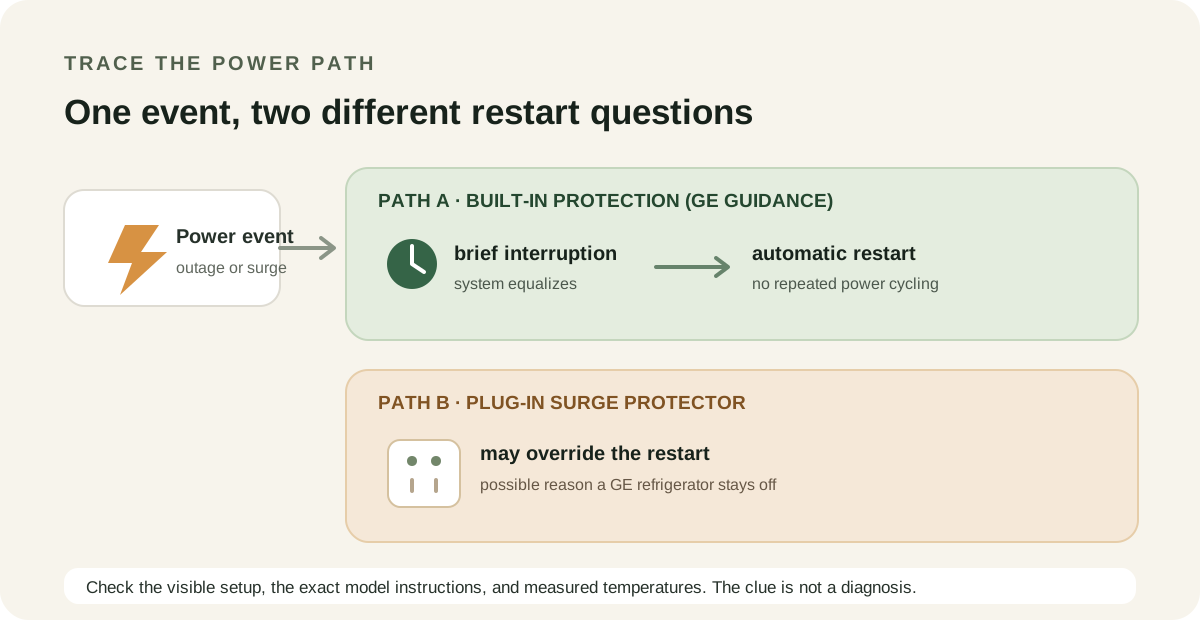
A refrigerator that stops cooling after a power surge may be waiting on its own restart protection, or an external surge protector may be preventing it from restarting. On GE refrigerators, a brief outage can trigger an automatic compressor-protection cycle while the refrigeration system equalizes; a plug-in surge protector can also interfere with that restart. These are separate possibilities. Check the power path and the exact model before assuming the compressor has failed.
The pause and the protector are not the same thing
After a brief power interruption, the compressor overload—not the compressor itself—may cycle while the refrigerant system equalizes. The compressor should then start and cooling resume automatically. Repeatedly cycling power is not required for this automatic protection. There is no one restart time that fits every model.
A plug-in surge protector is a separate device. A power surge can make a compressor shut down and restart, while an external protector may interfere with that built-in behavior and keep a GE refrigerator from restarting. This is one possible explanation when such a device is in the power path. It does not prove that the protector caused the problem, and it does not establish what another brand will do.
Keep the distinction clear: the refrigerator’s own protection can pause a restart; an external device can interrupt the power path. The restart time depends on the model and conditions.
Start with the power path, then check the temperature
First, write down what happened: a full outage, a brief flicker, or a surge that affected other devices. If you are not sure, record what you observed instead of trying to label the electrical event. Note when power returned and whether the refrigerator was cooling normally before it happened.
Next, look at the visible power path without moving the refrigerator. Does its cord appear to go directly into the wall, or through a plug-in surge protector or power strip? If a protector has a status light, note what it shows. Do not reach behind a heavy appliance, open an electrical cover, or handle a damaged, hot, wet, or scorched plug or outlet.
For GE refrigerators, a plug-in surge protector is not recommended. If one is in the power path and cooling has not resumed, record that fact and consult the exact model instructions or qualified support before changing the setup. Do not improvise around a damaged outlet or an electrical warning sign.
Then check the appliance itself. Look at the interior light and display, if your model has one. They can show that some functions have power; they do not confirm that cooling has resumed. Check both compartment temperatures with an appliance thermometer if available, and write down the readings with the time.
If the food compartments remain warm, protect perishable food while you follow the model’s guidance. The general power-outage refrigerator guide covers food safety and the broader post-outage checks.
If you have a GE refrigerator and the interruption was brief, its overload protection is automatic; repeatedly unplugging and reconnecting the appliance is not required for that behavior. If a plug-in surge protector sits between the outlet and refrigerator, treat it as a relevant clue, not a diagnosis. For another brand, use the exact model manual. Restart rules and controls are not universal.
If cooling does not return, temperatures continue to rise, or the next step would involve wiring or an internal part, contact the manufacturer or a qualified appliance technician.
What the signs can—and cannot—tell you
| What you observe | What it may mean | What it cannot prove | Next step |
|---|---|---|---|
| A GE refrigerator is quiet just after a brief outage | Its compressor protection may be waiting for the system to equalize before restarting | That the compressor has failed—or that it will restart within a fixed number of minutes | Avoid repeated power cycling; check the exact model guidance and temperatures |
| A plug-in surge protector is between a GE refrigerator and the outlet | The external device may be interrupting the refrigerator’s automatic restart behavior | That the protector definitely caused the cooling loss | Record the setup and its visible status; ask GE or qualified support how to handle that model |
| The light or display still works, but food is warming | Some electrical functions have power while cooling may not have resumed | That the compressor or sealed system is operating normally | Measure both compartments and report the timeline |
| The refrigerator has no light or display after power returns | Power may not be reaching the appliance, or a model-specific condition may be present | Which outlet, circuit, control, or internal part is responsible | Follow the manual; have a suspect outlet or circuit checked by a qualified person |
| A non-GE model behaves differently | Its restart logic may differ | That GE’s timing or protector interaction applies to this model | Use that refrigerator’s exact manual and support path |
When to stop checking
Stop handling the power connection if you see scorching, a damaged cord, water near the outlet, repeated breaker trips, or smell burning. Do not pull the refrigerator out or open a cover to inspect wiring. Contact qualified electrical or appliance service.
If the appliance is powered but both compartments keep warming, do not keep waiting for an assumed reset time. Protect the food, write down the measured temperatures and event timeline, and contact support. A restart clue is not a repair diagnosis.
FAQ
How long should a refrigerator take to restart after a surge?
There is no single delay that applies to every refrigerator. Automatic restart protection after a short outage does not establish one universal wait time for every model. Check your model’s instructions.
Should I unplug and reconnect the refrigerator to reset it?
Do not make repeated power cycling your first move. On GE refrigerators, short-outage protection works automatically and does not require cycling power. Follow another brand’s exact manual.
Can a surge protector keep a refrigerator from cooling?
A plug-in surge protector may override the refrigerator’s automatic restart after a surge. That is a possible clue for a GE unit, not a diagnosis for every brand or model.
The light is on. Does that mean the refrigerator is cooling?
No. A light only tells you that the light circuit has power. Check the actual compartment temperatures and whether cooling resumes.
Is this the same as a refrigerator that clicks but will not cool?
Not necessarily. Clicking has several possible sources and needs its own timing check. See Refrigerator Not Cooling and Clicking for that separate symptom.