If your LG dryer tumbles but does not heat, check the selected cycle and photograph the display before buying a heating element. Normal with Energy Saver can begin without heat. A Flow Sense warning points toward the exhaust path, while nP, PS and GAS messages send you toward the appropriate supply check. A spinning drum alone does not establish that the heater has the power or fuel it needs.
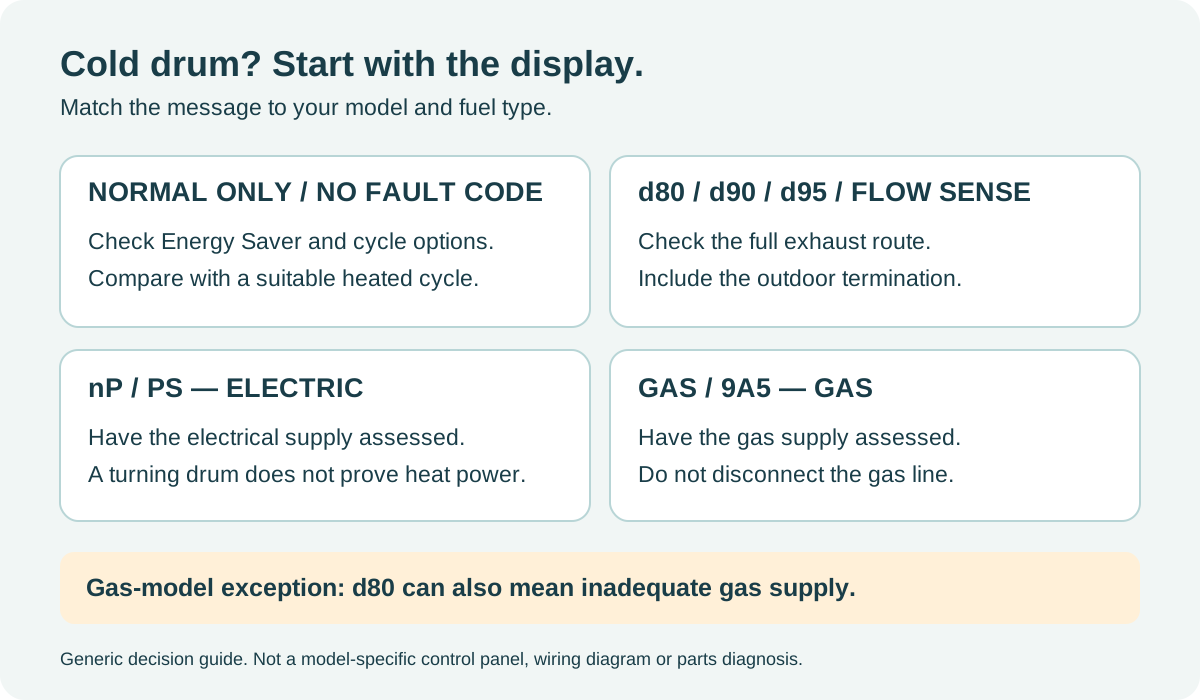
This guide covers vented LG electric and gas dryers used in the US. Follow only the branch that matches your fuel type and display. Heat-pump and ventless dryers need their own model instructions.
Stop using the dryer for a burning smell or repeated breaker trips. If you smell gas, leave the area without operating switches and contact the gas emergency service from outside. Do not open the cabinet, bypass a thermal safety device, test live wiring or loosen a gas connection. Electrical-supply checks and internal repairs belong to qualified professionals.
Cold only on Normal? Check the option first
On supported models, Energy Saver on Cotton/Normal adds an unheated part of the cycle. Turn that option off for the next suitable load and compare the result before concluding that the heater has failed. Whether the change persists depends on the model; check the option again next time.
A small load may miss the moisture-sensing bars and finish early. Compare it with the model's heated Timed Dry option, using a temperature suitable for the fabric. Heating on Timed Dry but not completing a sensor cycle is a different observation from remaining cold throughout a heated cycle.
With the dryer off and cool, clean the accessible sensor bars by the method in its manual. Residue can interfere with moisture detection. Let them dry before running another load.
Read the whole message
The word Cooling alone is not proof of a fault. Cooling is a normal stage near the end of a drying cycle. Check whether heat was absent throughout the heated portion, rather than judging the cycle only as it finishes.
Check Filter and FO / INSERT FILTER are not interchangeable. Check Filter can be the normal reminder to clean the lint filter; FO or flashing INSERT FILTER means the filter needs its seating checked on models that use that message. A filter that is not inserted properly can stop operation. Clean and refit it correctly; never run without it.
| Display | What changes in your next check |
|---|---|
| nP — electric dryer | The heater is not receiving the required electrical supply. Have the supply checked even if the drum turns. |
| PS — electric dryer | The dryer detects an improper supply condition associated with the power connection. Have the installer or electrician check it; do not remove the terminal cover yourself. |
| d80, d90, d95 or Flow Sense | Inspect the accessible exhaust route for restriction. Include the outdoor termination, not just the short hose behind the dryer. Stop drying until a restriction is corrected. |
Gas dryer: d80 has an extra branch
On a gas LG dryer, d80 can also indicate an inadequate gas supply. A cold gas dryer with d80 should not be treated as a proven blocked vent simply because of that code. If the accessible supply setting appears correct and the exhaust has been checked, have the installer or service technician assess the gas supply. This exception does not apply to an electric dryer.
What looks like 9A5 can actually be the segmented display spelling GAS. That message directs attention to insufficient gas supply. Record it exactly; do not order an electrical heating element for that symptom or disconnect a gas line to investigate it.
HS: unusually long running can be a sensor clue
An HS message concerns humidity sensing and can accompany a run lasting 2½ hours. Clean the accessible moisture-sensing bars and let them dry. If HS returns, arrange service. The long runtime alone does not establish that the heater is defective.
tE2: include the weather and the selected steam cycle
tE2 concerns temperature sensing, but cold conditions can bring it on during SteamFresh, Steam Sanitary or a Steam option as the duct cools too quickly. Check the accessible exhaust outlet for an obstructed flap or lint; arrange professional access if it is high or unsafe to reach. Record the cold conditions and selected cycle. A recurring tE2 still needs service, rather than an assumed thermistor replacement.
What an installation test can — and cannot — settle
If your model provides an installation or exhaust test, use its exact controls with an empty, cool drum. Let the complete test finish and record the final display. Button combinations differ; do not borrow one from another LG model.
An apparently clear installation test does not cancel a later Flow Sense warning. For the DLGX8001, normal-operation exhaust monitoring provides a more accurate assessment than the installation test, and the displayed bar counts can differ. Some restriction can remain even when the installation test shows no bars. Keep both results for the technician instead of choosing the more reassuring one.
The same symptom led owners down different paths
These are individual reported sequences, not proof that a particular part will fix your dryer.
Even the same model did not have the same answer. One DLEX8900B owner found that other cycles heated while Normal stayed cold; turning off Energy Saver resolved that report. Another DLEX8900B owner still had cold normal drying after supply checks, while an installation test produced heat and a sensor-related message was reported. That owner subsequently confirmed a replacement through the retailer. Heat during a test did not establish successful normal operation, and the second account did not prove a particular failed part.
Three other sequences show what can be missed after the first apparent explanation:
- DLE2516W, after a sneaker jam: removing the obstruction restored drum movement, but the laundry remained wet and cold. Internal checks had not found the answer. The owner later identified one tripped leg of the electrical supply. Restoration of normal heating was not separately documented; a turning drum had been the misleading clue.
- An electric LG after several parts replacements: it heated briefly, then failed on the next laundry run. The owner later found the vent exit pressed shut and reported recovery after correcting that and replacing a part again. The account does not isolate which intervention restored heat, and its component terminology is unclear. It supports checking the exhaust before repeating a parts purchase.
- A five-year-old LG vented through a roof: d80 continued after the hose and duct run were cleaned. Further inspection found lint collecting at mesh on the roof outlet. A completed repair was not confirmed. Ask a vent professional to inspect an inaccessible termination; do not climb onto a roof or remove a guard on the strength of an anecdote.
If it still stays cold
When a suitable heated cycle stays cold after the accessible settings and exhaust checks, arrange diagnosis of the supply and heating system. Replacing another fuse or element without establishing why heat stopped is not a dependable next step. For the broader, non-LG checks, use the dryer running but not heating guide.
Make the service description specific: model and fuel type; selected cycle and Energy Saver setting; exact display; whether any heated cycle worked; installation-test result; and what changed after the previous attempt. Keep a photo of the original message. Those observations help separate a cycle-selection issue, an exhaust warning and a supply fault before anyone starts ordering parts.