If your refrigerator is not cooling after control board replacement, the original fault may still be present, the replacement or its installation may need checking, or the appliance may still be recovering after the repair. Compare the actual refrigerator and freezer temperatures with the display and fan behavior. A fan starting or a display changing does not, by itself, show that the repair restored cooling.
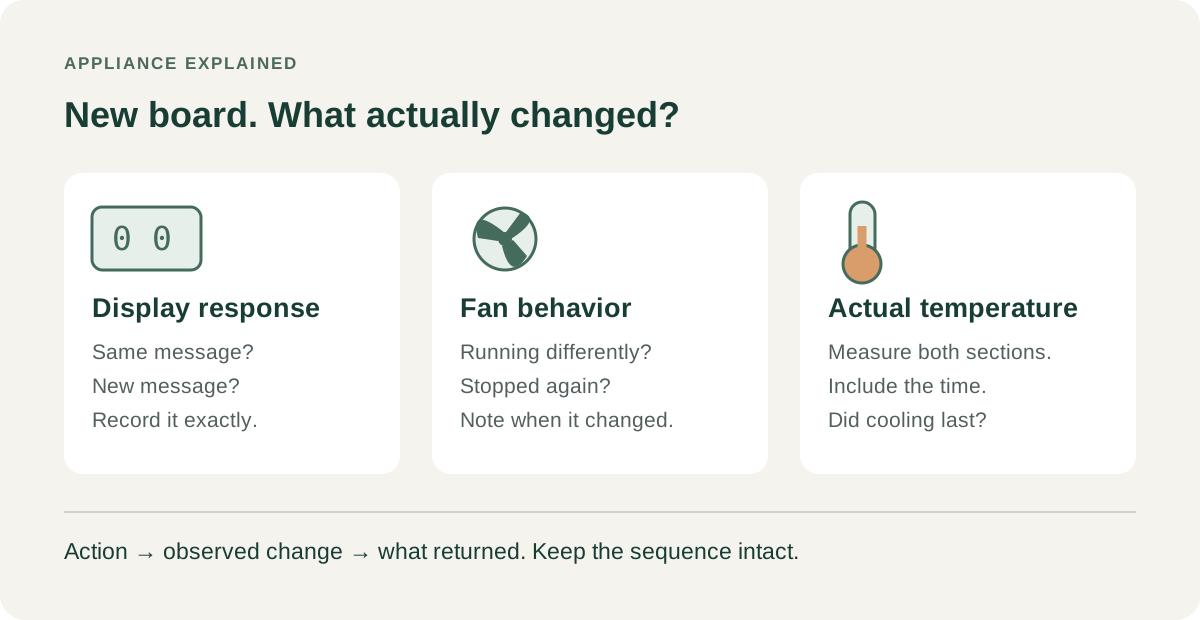
Before another part is fitted, separate an unchanged problem from a new symptom and a short-lived improvement. Those lead to different questions for the person who did the repair.
Start with the result, not the replacement receipt
Use appliance thermometers to check both compartments. Keep refrigerated food at 40°F (4°C) or below; move perishables to reliable cold storage while the refrigerator is too warm. Cooling recovery does not make food that was stored unsafely safe again.
Record when power was restored, the readings, and any display message. Ask the installer to confirm the replacement against the complete model number and to check any setup required for that appliance. If cooling is switched off at the controls, use the exact-model owner procedure to turn it on.
Leave the board cover closed. Connector checks, electrical testing and further board changes belong with a qualified technician, with power disconnected before internal work. The repair histories below explain useful observations; they are not instructions to repeat internal repairs.
The same flashing display survived two board changes
One refrigerator stopped cooling and began flashing zeros. A replacement main board brought back some cooling in both compartments, but neither became cold enough and the flashing pattern stayed the same. A subsequent display-board replacement produced no change in behavior.
That sequence leaves two results to document: partial cooling returned, while the display fault persisted. It does not establish which component was defective, or show that the second board was the right next purchase.
Take a photo of the display and give the installer both temperature readings. If a communication fault is confirmed for your model, its cause can involve a control board, display board or connecting wiring. An unfamiliar display alone cannot choose between them.
Stronger airflow arrived with a warmer freezer
In another repair, the freezer fan blew more strongly after a motherboard change, yet the frozen contents melted. The owner then reinstalled the old board. A later replacement and condenser cleaning still did not produce an immediate recovery; after another return to the old board, the owner eventually described the refrigerator compartment as normal while still questioning the freezer's performance.
There was no confirmed final diagnosis. The stronger fan was a real change, but it was not evidence that the replacement had solved the cooling problem.
The practical lesson is to keep each configuration's result separate. “It ran after the repair” loses the detail that one board installation changed airflow while the freezer became warmer. Do not repeat board swaps to create your own comparison; give the existing sequence to the installer.
Thawing changed the result after a board replacement did not
A different refrigerator had a warm fresh-food compartment and a cold freezer. Replacing and programming the control board did not cool the upper compartment. After ice was found and allowed to thaw, the evaporator fan ran briefly and the upper compartment cooled, but the fan subsequently stopped again.
The useful distinction is the order: board replacement did not bring the recovery; the temporary improvement followed thawing. That observation is worth reporting even though it does not identify a failed fan, refrigerant leak or other internal fault.
If that resembles your repair, say how long the improvement lasted and what returned first. Do not describe the new board as a successful fix simply because cooling resumed at some point afterward. A cold freezer with a warm refrigerator compartment also deserves its own airflow assessment.
A better first day still included thawing and refreezing
One top-freezer refrigerator repeatedly shifted between cooling and warming. Its owner tried forced defrost, checked a temperature sensor at room temperature and in ice water, and then fitted a refurbished control board. More than 24 hours later, performance seemed better, but the freezer had still gone through a thaw-and-refreeze episode.
The missing observation was whether the compressor and fan continued running during the warm spell. Their operation while cold air was coming out did not answer that question.
That is a reason to record the returning symptom, not a diagnosis of another bad board. The 24-hour figure describes this repair history; it is not a universal waiting period. Use the recovery instructions for your appliance and contact the repairer if the original failure returns. Keep food protected while waiting.
Give the repairer a before-and-after timeline
For the callback, put the work and its result on the same line:
| Repair stage | Detail that makes the result useful |
|---|---|
| Before the board was changed | Which compartment was warm, measured temperatures and the original display message |
| Immediately after the change | What actually changed: display, airflow, running sound or measured temperature |
| After another action, such as thawing | Whether improvement began after that action rather than after the board replacement |
| When the problem returned | Which symptom returned first, the temperature readings, and any sound or message noticed then |
Add the installed part number from the invoice or packaging if you have it. You do not need to remove a cover to collect it.
The next decision should address the unresolved result: unchanged cooling, a persistent display fault or a recurring warm spell. A record that separates those outcomes gives the repairer more to investigate than another request to replace the board.