If your refrigerator is not cooling and another door pops open when you shut one compartment, watch whether the opened door seals again. Shared air passages can transmit a pressure pulse between compartments. A brief bounce that closes again can be normal; a door that remains ajar can admit warm air. Check the final door position, clear obstructions, and distinguish a seal problem from a closure mechanism or folding-flap problem.
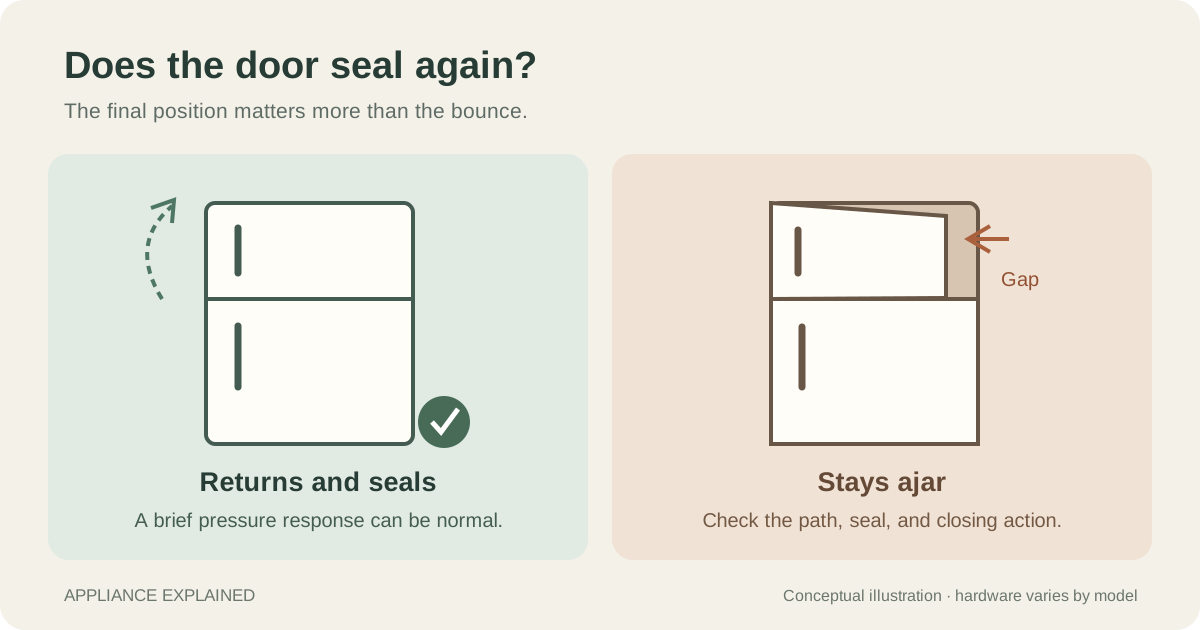
The bounce matters less than the gap it leaves
Close the door gently while watching the other compartment. Does its door flex and return, open briefly and shut, or stop with a visible gap? These are different observations. The last one needs attention even if the movement looks small.
Do not slam a door to reproduce the problem. With a Samsung refrigerator, gentle closure kept the freezer shut, while a firmer closure pushed it open. Replacing the freezer gasket had not changed that behavior. That sequence does not identify a failed part; it shows why a new seal alone may not settle a pressure-related complaint.
For your refrigerator, the useful question is whether ordinary closure leaves every compartment sealed. A normal pressure pulse does not make a lasting opening acceptable. Watch the landing.
Clear what the door actually touches
Start with the visible closing path. A package protruding past a shelf, a drawer left forward, or a door bin that is not seated correctly can prevent full closure. Check recently removed shelves and bins against their proper positions. On some designs, an object resting on top of the cabinet can also interfere with the door.
Inspect the gasket where it meets the cabinet. Wipe accessible dirt with a soft cloth dampened with warm water, then check the contact again. If the gasket is torn, detached, or deformed, use the instructions for the exact model to determine the appropriate correction. Cleaning cannot substitute for fixing damaged hardware.
Once the path is clear, compare what happens when each door is used normally. Avoid repeatedly opening the compartments while food is warming. Keep this check brief.
| What you can see | What it helps distinguish | Next check |
|---|---|---|
| The opposite door moves, then seals again | A brief pressure response | Confirm that no gap remains after normal closure |
| A package, drawer, or bin meets the door first | An obstruction | Reposition that item and check closure again |
| A clear door still lacks its usual closing action | A possible alignment or closure-hardware issue | Check the model’s installation requirements and arrange inspection if it persists |
| A French-door center flap remains in the wrong position | A folding-flap or guide issue | Observe its movement and the opening order that triggers it |
A fresh gasket does not prove the closer is working
The flexible gasket seals the opening. A hinge, cam, stopper, or closing mechanism helps position the door, depending on the design. Treating all of these as a “bad seal” can send you back to the same unsuccessful repair.
An LG LRFWS2906S had a right door that opened when the left door closed. Checking the level and raising the front feet did not resolve it. The stopper initially looked intact, but a closer inspection revealed a crack. A replacement was ordered; a successful repair was not confirmed. The crack was a useful finding, not a proven outcome.
With an LG LMXS27626S, replacing the seal and tilting the cabinet rearward both failed to restore closure. Replacing the lower hinge assembly restored the closing action in that case. The small opening had not triggered the door chime, so silence had offered false reassurance.
These outcomes justify looking beyond the gasket; they do not establish which component your refrigerator needs. Do not select a part merely because another refrigerator looked similar. Match the mechanism.
Does opening the doors in a different order change the problem?
On a French-door refrigerator with a folding center seal, watch the narrow flap on the inner edge of the door. This piece is often called a mullion. It must move into the position required by that design as the doors open and close. A flap left projecting outward can obstruct closure even when the soft gasket is undamaged.
An LG LMXC23746D developed a flap problem after its doors had been removed for a move. Opening the left door first let the flap behave normally; opening the right and then the left left it in the wrong position. Manually repositioning the flap allowed closure. Cleaning the flap later appeared to improve its movement, but that does not establish a lasting repair or a universal cleaning procedure.
If your problem changes with opening order, that is a more specific clue than “the doors pop.” Check the flap and guide visually instead of assuming every opening is caused by air pressure. Follow your model’s instructions for positioning it; do not force a jammed flap, dismantle its hinges, or copy a cleaning method meant for a different assembly.
Opening order is a clue, not a cure.
Leveling advice has a model boundary
A freestanding refrigerator may need a slight rearward tilt to help its doors close, but there is no single adjustment to apply to every cabinet. Use the installation instructions for the exact model before changing feet, rollers, or alignment.
For GE built-in refrigerators, the general recommendation to raise the front slightly does not apply. A door that will not stay closed on those models needs the appropriate built-in service check. Do not keep increasing the tilt because a generic suggestion did not work.
If the problem began after moving the refrigerator or removing its doors, explain that history when arranging service. Some closing mechanisms depend on correct hinge assembly and door positioning. A repair should restore the intended closure, rather than require you to hold another door shut every time.
The cabinet design decides the adjustment.
When the closure check is finished
If an unobstructed door still remains ajar, or a flap binds or a closure component appears damaged, have that specific assembly inspected. This is the point to stop adjusting by trial and error. Door removal and hinge work are beyond this external check.
If all doors now seal but the refrigerator stays warm, the opening may not explain the whole cooling problem. Continue with the refrigerator cooling checks, including the food-safety guidance there. Closing a gap does not, by itself, confirm that stored food or the cooling system is okay.
Separate closure from cooling recovery.
Questions about doors that pop open
Can a normal pressure bounce explain food warming?
A bounce that immediately reseals is different from a door that stays open. First establish which one occurs. If the door returns fully and temperatures are still wrong, do not stop the cooling investigation at the bounce.
Does a quiet door alarm mean the refrigerator is sealed?
No. A small opening can exist without a chime, as the LMXS27626S case illustrates. Look at the closed position instead of using silence as the seal check.
Should I buy another gasket if the new one did not help?
Not solely because the symptom remains. Recheck the closing path and the mechanism that brings the door into contact with the cabinet. A replacement gasket cannot correct every hinge, stopper, or center-flap problem.
Should both French doors always close the same way?
Their hardware may differ, especially when one carries the folding center seal. Compare each door’s behavior with its intended movement, rather than assuming identical closing resistance or fitting the same parts to both.