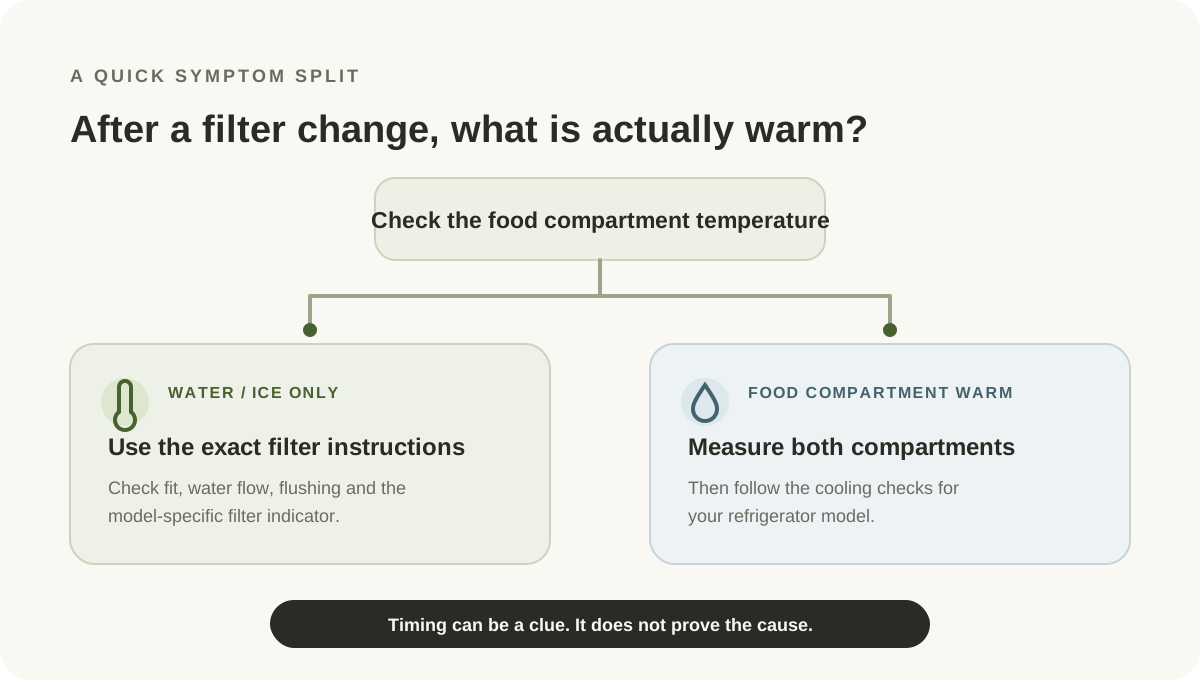
A refrigerator that feels warm after a water-filter change does not prove the new filter caused the cooling problem. First separate two symptoms: Is only the dispensed water or ice different, or is the food compartment actually warm? Manufacturer filter instructions cover the water path and filter indicator; a warm refrigerator needs its own temperature check.
First, check what is actually warm
Put an appliance thermometer in the refrigerator compartment and check the freezer separately. Do not use the display setting, a quick touch, or the temperature of one glass of water as a substitute for measuring the food compartment.
If the refrigerator compartment is holding its normal temperature but the dispenser water is not cold, the water system may simply need time after heavy use. In some LG refrigerator models with a water tank inside the fresh-food compartment, the tank water cools with the compartment. Its temperature can change with the refrigerator setting, door openings, and how much water has just been drawn. That explanation is model-specific; check your manual if the dispenser water is the only thing that feels warm.
If the food itself is warming, treat that as a cooling symptom even if it began right after a filter change. The timing is useful to report, but it does not name the cause. For food above 40°F (4°C), use the food-safety guidance in the refrigerator temperature and food-safety guide while you check the appliance.
What the filter change can explain
A clogged or incorrectly installed water filter can reduce water flow to the dispenser or ice maker. A new cartridge may also need the model-specific flushing and filter-indicator reset steps. Those are water-system checks. They do not, by themselves, identify why food in the refrigerator is warming.
Check the label or model number before buying another cartridge. Filter locations, compatible cartridges, installation direction, flushing amounts, and indicator buttons vary. Do not force a cartridge that will not seat, and do not copy a button combination from a different refrigerator. Use the owner’s manual for your exact model.
Keep the timeline in order
Write down when the food compartment first became warm, when the filter was changed, and what happened to water or ice flow. If the compartment was already warming before the cartridge change, include that earlier temperature problem. If only the dispenser changed, start with the water-path instructions for the exact model.
The order helps separate two events; it does not prove that one caused the other. A filter change is a useful clue, not a diagnosis.
Do not confuse two different parts called “filters”
The cartridge a homeowner changes is a water filter for the dispenser or ice maker. Some parts diagrams also use the term filter/drier for a different component in the refrigerator’s sealed cooling system. That internal component is not the drinking-water cartridge.
If a service explanation says “the filter is restricted,” ask which part is meant. A water-flow problem and a sealed-system diagnosis are different issues. Do not open a panel or try to access refrigerant tubing; sealed-system work belongs to a qualified technician.
Use this quick comparison
| What you notice | What it supports | What it does not prove | Next step |
|---|---|---|---|
| Food compartments stay cold, but the dispenser is slow after the change | A water-filter fit, water-flow, or flushing issue is possible | That the refrigerator cooling system has failed | Check cartridge compatibility and the exact manual’s installation and flushing steps |
| Dispenser water is warm after drawing a lot, but measured food temperature is normal | The stored water may need time to cool again on models that chill a tank inside the refrigerator | That the refrigerator compartment is warm | Check the exact model design and recheck the compartment temperature |
| Food in the refrigerator is warm, whether or not the dispenser works | A separate cooling problem needs checking | That the new water filter caused it | Record refrigerator and freezer temperatures, then use the main refrigerator cooling checks |
| Water leaks around the new cartridge | The filter may not be seated or may not match the model | That the cooling system is the source of the leak | Stop using the dispenser and follow the model’s leak instructions; get help if the water supply cannot be safely stopped |
When to stop
Stop at the owner-level checks if water is leaking where you cannot safely reach the shutoff, a cord or control looks damaged, or the next step would require removing an internal panel. Do not repeatedly unplug the refrigerator or try random button sequences to make it cool. Keep the doors closed as much as practical, protect perishable food, and contact the manufacturer or a qualified appliance service provider if the measured temperature remains high.
When you call, give them the model number, both compartment temperatures, the filter type, whether water or ice flow changed, and the order of events. That helps separate a dispenser issue from a cooling issue without guessing at a failed part.
FAQ
Can a refrigerator water filter make the whole refrigerator stop cooling?
A water-filter change alone does not establish why the food compartment is warm. Filter guidance describes water flow, flushing, and filter-status indicators. Measure the compartments and follow the cooling instructions for your exact model.
The water stopped dispensing after I changed the filter. Is that the same as “not cooling”?
No. Water flow and food-compartment temperature are different observations. Check that the cartridge is the correct one and installed as the manual shows. If the refrigerator temperature is normal, stay with the model’s water-system guidance.
Why is the dispensed water warm when the refrigerator still feels cold?
Some refrigerators cool stored dispenser water in a tank inside the fresh-food compartment. After a large draw, the replacement water may take time to cool. The design and recovery guidance vary, so check your model’s manual and measure the food compartment separately.
What if the refrigerator says “Cooling Off” after I changed the filter?
Use the exact model’s instructions for that display. Filter-indicator reset steps vary by model and are not a universal way to turn cooling back on.
The key is to follow the symptom that you can verify: water flow, dispenser-water temperature, or food-compartment temperature. A filter change may explain the first two; the thermometer decides whether the refrigerator itself is warm.