If your refrigerator ice maker is not working, look inside the ice bin first. An empty bin calls for checks of the ice-maker setting, water supply and freezer temperature; a bin containing ice points toward the dispenser, a clump or a badly seated bucket. Use the reset procedure for your exact ice-maker design only after those checks. Repeatedly pressing Test can create another problem.
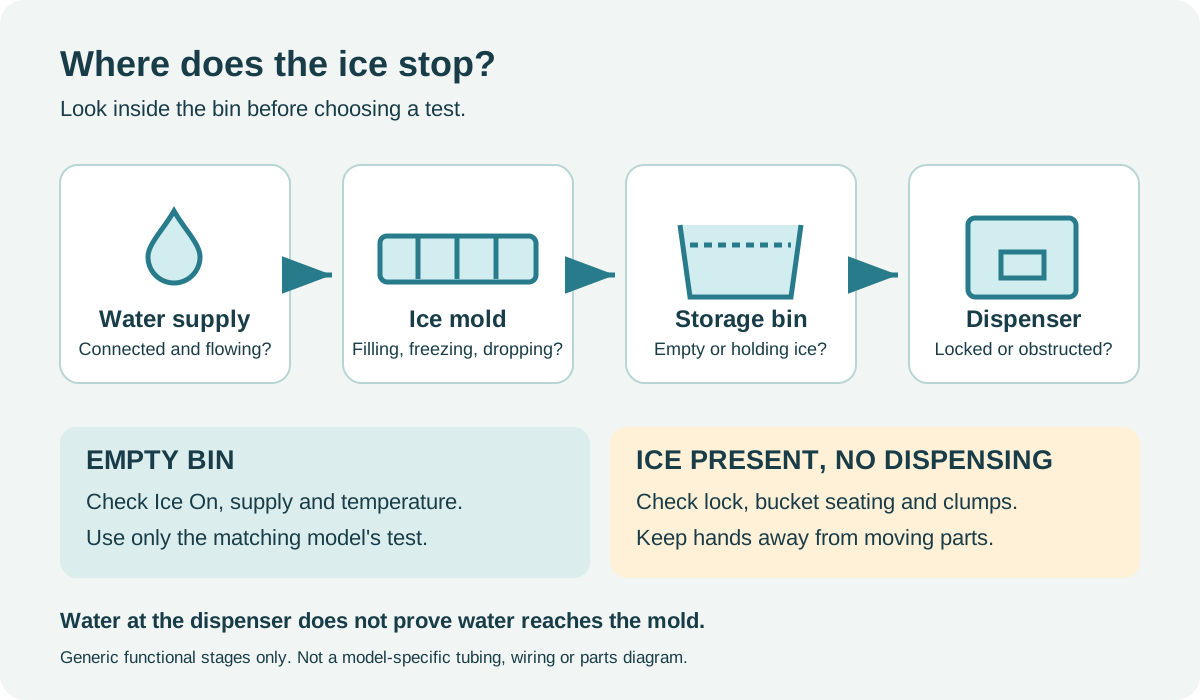
This guide covers ice makers built into refrigerators. A countertop machine with a refillable reservoir needs a different troubleshooting path.
Empty bin or ice that will not come out?
With the mechanism idle, inspect the removable bucket as your manual allows. Keep your fingers out of the auger, mold and moving arm.
| What you find | Start here |
|---|---|
| Ice in the bucket, nothing from the dispenser | Check the dispenser lock, bucket seating and loose ice clumps. A working ice maker can still have a dispensing fault. |
| Empty bucket and no new ice | Check that ice production is enabled, the water supply is connected and the freezer is cold enough. |
| Frozen cubes remain in the mold | Note that ice formed but did not fall. This is different from a mold that never receives water; an internal harvest fault needs service. |
| Bucket frozen in place or water overflowing | Stop pulling or testing. Turn ice production off; for a water leak, close the accessible water shutoff and arrange help. |
Do not bend the shutoff arm, pry a frozen bucket loose, or use a hair dryer to melt an ice-room blockage. Remove only loose clumps from a removable bin using the cleaning method in its manual, and dry it before refitting.
Check the setting and the actual temperature
Make sure the ice maker is on. On Samsung models, an illuminated Ice Off setting normally means production is disabled; on a dual system, check the setting for the ice type that has stopped.
Blinking Ice Off is a different clue on supported Samsung refrigerators: the bucket is missing or not inserted correctly. Check its seating before treating the blinking indicator as a motor failure.
Measure the freezer with an appliance thermometer. A display set to 0°F (−18°C) does not establish that the compartment has reached that temperature. Use your model's specified setting, clear food away from vents and make sure the doors seal. If the food compartment is warming too, follow the refrigerator cooling checks instead of concentrating only on ice.
Water from the dispenser does not prove water reaches the mold
Check the accessible supply valve and visible tubing for a closed valve or a pinch. Do not disconnect tubing or open a rear cover to test pressure. If the problem began after changing a filter, confirm the correct cartridge is fully seated and complete the flushing procedure for that refrigerator.
Water arriving at the dispenser does not establish that the ice-maker fill path or its valve is working. Nor does a new filter prove that the rest of the water system is clear.
Samsung: check the production year before removing the filter
For a Samsung dispenser-flow check, testing with the filter removed is limited to refrigerators manufactured in 2024 or earlier. Do not apply that test to a unit manufactured in 2025 or later. If you cannot establish the production year, leave the filter fitted and get model-specific help.
For an eligible older model, a change in flow after removing the filter is useful evidence about the water path. It does not diagnose the ice maker by itself. On a newer model, continue with the fitted-filter, supply and visible-line checks instead of copying the older bypass test.
Before you press Test again
Reset controls differ even within one brand. Match the ice maker's location and design to the exact manual; do not use a button combination merely because it works on another refrigerator.
Samsung: a test can move without a chime
On the supported Samsung reset designs, visible movement of the ice maker can indicate that the reset worked even if you did not hear the chime. Silence alone is not enough to conclude that the motor failed. Watch from outside the mechanism.
Do not repeatedly press Test while the tray contains water or ice. Another test can cause water to overflow or ice to jam. Allow the documented cycle to finish; a test is not a way to hurry freezing.
For the Samsung dual Cubed Ice / Ice Bites design, the two makers have their own Test buttons. Testing the left cubed-ice maker does not test the right Ice Bites maker. Identify which side stopped before selecting a test.
LG: some designs limit early testing
On the LG ice-maker style without its own power switch and without an exposed tray, the test can run only once during the refrigerator's first two hours after being plugged in. A second ignored attempt in that window is not, by itself, evidence of a dead motor. This restriction is specific to that design; it is not a rule for every LG ice maker.
Once a permitted test has finished, replace the bucket, close the door and observe normal production. A forced harvest shows what happened during that test. It does not prove that the machine will start the next batch on its own.
LG Craft Ice needs a different clock
If your LG refrigerator makes round Craft Ice, do not compare its output with an ordinary cube tray. In 3 ICE mode the target is three spheres per day. In 6 ICE mode it is six per day, made as two batches of three, not six spheres in one drop.
A newly installed Craft Ice refrigerator can take up to 48 hours to start making ice. Check that Craft Ice is enabled and judge production over its own startup and daily cycle. An empty bucket after a short wait does not yet establish a fault.
When an apparent fix does not last
These owner-reported sequences show why the next observation matters. They describe individual refrigerators, not a failure rate or a parts recommendation.
- Whirlpool WRX986SIHZ02: manual harvest and filling tests produced ice, but automatic operation remained absent. A filter change and cleaning the bin's sensor areas did not resolve it. A sensor fault was suspected, not confirmed.
- Whirlpool WRS325SDHZ08: switching ice production off and back on had restored it during an earlier failure. When the problem returned, another off/on attempt and unplugging did not restore production. The final repair was not reported.
- A Whirlpool French-door unit identified by its owner as WRF736SDAM14a: leaving it unplugged for days did not help. A technician then replaced the ice maker; production briefly returned and stopped again. The reported fault changed, but no final cause was established.
- A Whirlpool unit that first filled its bin with a solid block of ice: two replacement ice-maker assemblies still received no water. The owner later reported that replacement of the water-valve system restored operation with the original ice maker.
The first case could make the mechanism run in a test. The second could not recover by repeating a previously helpful reset. Both observations are useful; neither makes “try another reset” a complete diagnosis. If a repair or reset brings only temporary ice, report what happened to the next batch before buying another assembly.
Samsung codes that change the next step
Photograph a displayed fault before resetting anything. Unless directed for that exact code, do not unplug a Samsung refrigerator just to erase the display: that can remove useful diagnostic information.
| Displayed code | Reported fault area |
|---|---|
| 8E | Freezer ice-maker sensor |
| 14E | Ice-maker sensor |
| 33E | Ice-pipe heater |
| 39E / 39C | Ice-maker function |
| 40E / 40C | Ice-room fan |
These codes call for service assessment. They identify the reported area, not a verified part to order. A blinking Ice Off indicator belongs to the bucket-seating check above and should not be confused with these faults.
For the service call, describe the last completed stage: water arrived, ice froze, cubes dropped, or ice reached the dispenser. Add the model, displayed code, measured freezer temperature and whether production stopped again after a test. That gives the technician a more useful starting point than “the ice maker is broken.”