If your refrigerator is not cooling and a grinding or rattling noise stops when you open the door, a fan that pauses with the door open is a useful lead. Ice touching a fan or a fault in the fan itself can produce that pattern. It does not identify the exact part, and silence does not mean cooling has recovered. Note which door stops the noise, check the compartment temperature, and arrange an inspection if the abnormal sound or poor cooling continues.
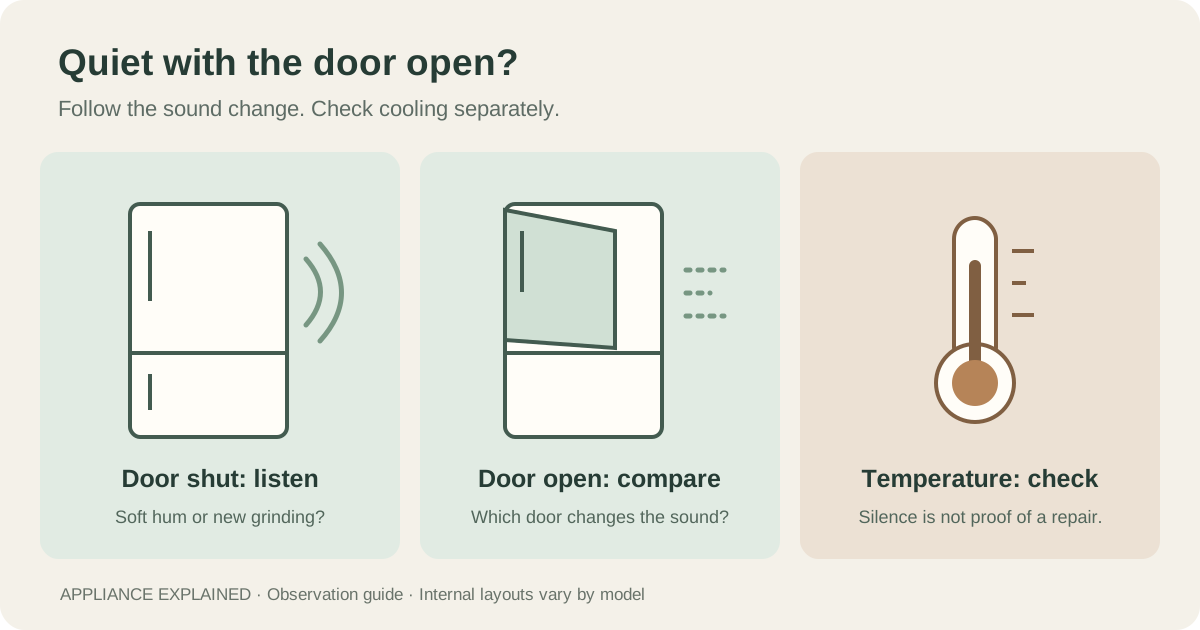
First, distinguish a paused fan from a noisy door
A soft fan hum that disappears when the door opens can be normal on a refrigerator whose controls pause the internal fan. A new grinding, scraping or groaning sound needs a different response, especially if the cabinet is getting warmer.
Listen to the sequence. Does the noise exist with the door shut and fade when you open it, or does it happen only while the door is moving? Squeaking from a moving hinge or a door rubbing against something is a separate symptom. Do not order a fan because a door squeaks.
Keep the observation brief and close the door afterward. Leaving it open to silence the noise is not a repair. Fan controls differ by model, so the sound change alone cannot establish that the compressor has stopped or failed.
Which door stops it?
If you have already noticed the noise during normal use, distinguish the fresh-food door from the freezer door. “It stops when I open the refrigerator door but continues when I open the freezer” is more useful than “it stops when a door opens.” That distinction still needs to be matched to the appliance's layout.
On a Samsung RF27T5201SR/AA, that exact difference was followed by a service diagnosis of a faulty fan associated with the ice maker. The owner reported that the problem was not an ice buildup; the ice-maker assembly was eventually replaced. Turning off ice production had been discussed as a possible workaround, but the technician said it would not resolve that fault.
That is an individual repair history, not a rule for every RF27T5201SR/AA. It shows why an ice-maker-area noise does not automatically mean that selecting Ice Off will silence the faulty component. Record the door response before choosing a remedy.
No visible ice does not clear every fan
The first place inspected may not contain the fan making the noise. Similar-looking refrigerators can have different internal arrangements, and “the panel looked clear” is incomplete unless you know which compartment and assembly were checked.
In one bottom-freezer refrigerator, an inspection behind the upper compartment's panel found no ice and did not locate the cause. Attention then shifted to the lower freezer fan. Isolating that fan changed the sound, even though no ice was visible there either. A replacement was planned, but a completed repair was not confirmed.
The useful distinction is between finding the sound's source and proving a repair. Those are separate results. The first unsuccessful inspection did not establish that all the fans were clear, and locating the noisy fan did not establish how it would behave after replacement.
Keep your own checks outside the panels. Do not disconnect a fan, defeat a door sensor or run exposed components to imitate an internal diagnosis. Give the technician the compartment and door observations instead.
Grinding can come from the fan even without ice
Ice rubbing against a fan is one explanation for a noise that stops with the door open. It is not the only one.
A Samsung refrigerator with a groaning sound had no ice buildup at inspection. Turning the fan by hand reproduced the groan, shifting the investigation from ice clearance to the fan itself. The owner later reported that replacing the fan eliminated the noise. The exact model of that particular refrigerator was not confirmed, so that outcome cannot supply a part number for yours.
Compare the evidence, not just the sound description. Visible ice, a fan that makes a mechanical noise without ice, and an unconfirmed guess about bearings are not interchangeable findings. A technician can determine whether the obstruction, the fan assembly or another component needs attention.
A quiet spell after thawing can be misleading
For a fan rubbing against ice, thawing may remove the immediate contact while leaving the reason for the ice unresolved. If the noise returns, repeated thawing should not become the assumed permanent fix. Do not use a hair dryer or another heat source inside the refrigerator.
One LG owner first tried a manual thaw, leaving the appliance off with the doors open for about 14 hours, while also cleaning the compartments and checking intact gaskets. After restarting, it stayed quiet for about 4 hours before the noise returned. The next step was to seek an inspection.
Those are approximate times from that single attempt, not a recommended thaw schedule. They do not establish that all hidden ice had melted, or prove which component failed. They establish something narrower: the initial quiet period did not last. Use the procedure for your exact model if a manual thaw is appropriate, with food moved to suitable cold storage beforehand.
Cleaning the coils is not a noise diagnosis
An external maintenance check and an internal fan check answer different questions. In another Samsung refrigerator, cleaning the rear coils did not settle the noise complaint. A technician then inspected the freezer fan, found no ice and considered replacing the fan. Before the planned replacement happened, the noise stopped on its own.
That history contains no confirmed repair and no temperature record proving cooling recovery. It would be a mistake to credit the coil cleaning simply because the refrigerator was quieter later. If yours is still warm, the temperature problem remains even when the irritating sound has gone away.
Check temperature separately.
What to do with the observation
| Observation | What it establishes | What it does not establish |
|---|---|---|
| Soft airflow noise pauses when a door opens | It can fit normal fan control on that model | That a warm compartment is cooling correctly |
| Grinding stops with the fresh-food door, but not the freezer door | A specific door response worth reporting | The exact fan, bearing or replacement assembly |
| No ice was found behind one panel | That particular inspected area was clear | That another fan or compartment is clear |
| Thawing brings only temporary quiet | The sound changed, then returned | A lasting repair or proof that the motor is healthy |
| Noise disappears without a completed repair | The symptom is currently absent | That stored food or cooling performance is okay |
For a service visit, provide the exact model, which door changes the noise, where it seems loudest, and whether the measured temperature changed too. Include any earlier cleaning or thaw attempt and whether its effect lasted. That history helps avoid starting again with a step that already failed.
If the noise is gone but cooling is still poor, continue with the refrigerator cooling checks, including their food-safety guidance. If the freezer remains cold while the refrigerator warms, use the compartment airflow checks. The door observation narrows the question; the temperature tells you whether the cooling problem is still there.