If your refrigerator is not cooling after start relay replacement, a new relay has not established that the compressor starts and cooling works. The replacement or its installation may need checking, or the original fault may lie elsewhere. Check the actual compartment temperatures and tell the repairer whether the clicks changed, cooling ever returned, or a new symptom appeared. Do not choose another part from the sound alone.
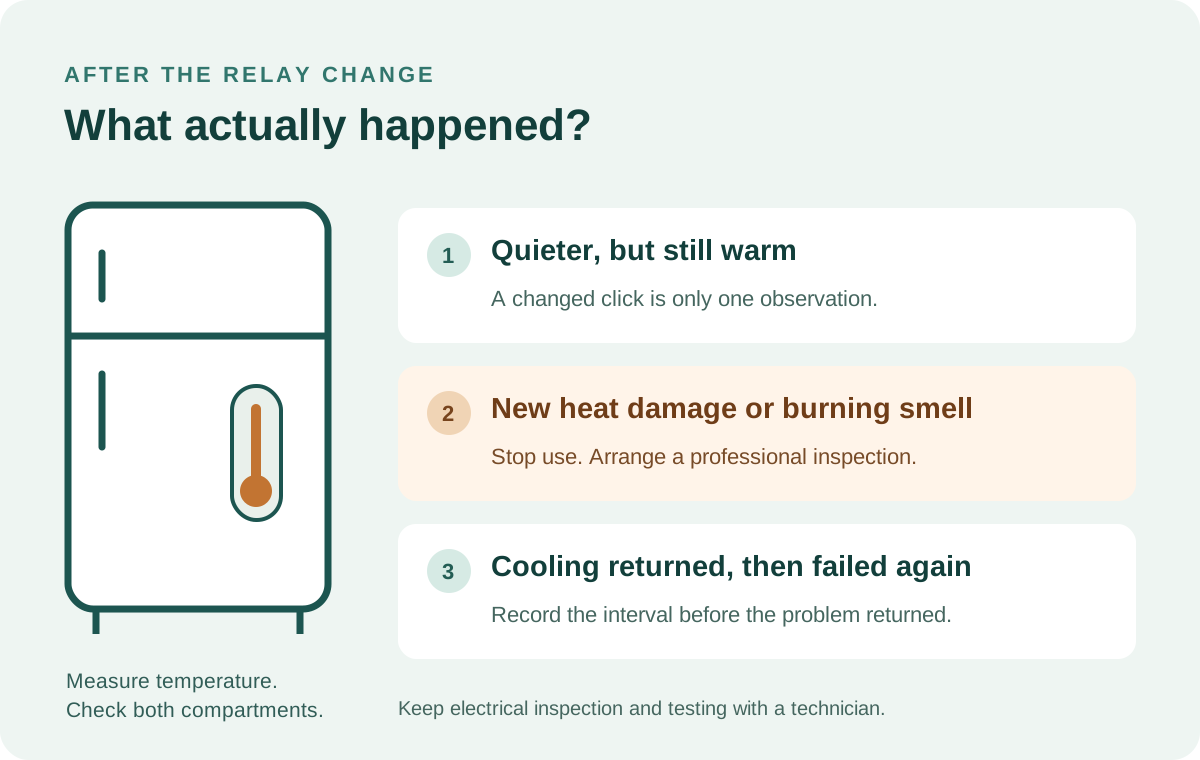
If you notice a burning smell, smoke or heat damage, stop using the refrigerator and disconnect power if you can do so safely. Do not reach behind it to touch the compressor or wiring. Keep perishables in reliable cold storage while the appliance is warm; refrigerated food should remain at 40°F (4°C) or below.
The clicks stopped after the second relay, but cooling did not
One French-door refrigerator with a bottom freezer began clicking twice every few minutes while both compartments warmed. Its owner fitted a replacement start relay, but the clicking and lack of cooling continued. With a second replacement, the clicking stopped.
The next morning, the refrigerator was still warm. A loud fan made it difficult for the owner to tell whether the compressor had started. The old relay also had a burn mark. No final cause or successful repair was confirmed.
That sequence matters because the second part produced a convincing change in sound without the result the owner needed. It does not establish that the second relay was correct or defective, or that the compressor had failed.
Check temperatures even when the refrigerator becomes quieter. Keep the packaging or invoice for both replacements and describe their different results to the repairer. Do not keep swapping parts to reproduce the change.
Another set of parts also failed to restore cooling
A GE GTS16GSHMRSS had been clicking repeatedly and sometimes allowing its contents to thaw. The owner replaced the start relay and capacitor and tried cleaning the condenser area. The refrigerator still measured 67–70°F.
Maintenance later removed those replacement parts and fitted another set. The owner reported that this did not resolve the problem either.
This was an unsuccessful result after more than one parts change. It was not proof that every replacement part was bad, and it did not establish a particular compressor or sealed-system fault. Those possibilities still needed testing.
For a similar callback, give the repairer the measured temperature along with the list of parts already changed. Ask what has been established about startup and cooling operation before another replacement is proposed. A cool feeling inside the cabinet is not a substitute for that temperature reading.
Fewer clicks came with new heat damage
In a separate repair, the original starting attempt dimmed the room lights and was followed by another click. After a universal start device was fitted, the owner heard only one click. Cooling still did not return, and the owner described enough heat near the compressor area to soften glue around the drip tray.
The owner unplugged the appliance. The exact refrigerator model, replacement compatibility and final diagnosis were not established.
The important change here was the reported heat damage. This is not a situation to leave running while waiting for the cabinet to cool. Stop use and arrange an inspection; do not touch hot tubing, remove electrical covers or bypass the overload protector.
A universal label alone does not settle whether a device is appropriate for a particular compressor. Have the repairer verify the application rather than treating the quieter startup as approval to keep testing it.
The replacement was fitted, but its seating remained uncertain
On a GE GFE28GYNGFS, an owner fitted a start relay identified as WR07X10131 and reported that the original problem remained. The owner also noticed that the replacement's plastic housing did not sit flush against the compressor and was unsure whether the unchanged overload protector might be involved.
That is a record of what was fitted and what remained uncertain—not confirmation that the part was compatible, installed incorrectly or responsible for the fault. A visible gap on its own cannot decide those questions.
If this resembles your repair, give the installer the complete refrigerator model and the part number from the receipt. Ask them to verify the part application, seating and connections, and which components were actually checked. Do not push the device farther in, rearrange wires or order the adjacent part based on appearance.
It cooled for months before the problem came back
A refrigerator that had stopped getting cold resumed working after an aftermarket relay was installed. Its owner described several months of satisfactory operation before it stopped cooling again. The next question was whether to buy an original-equipment relay or investigate a larger problem.
There was no confirmed answer. Neither the exact model nor the failed component was established.
This differs from a refrigerator that never cooled after replacement. Preserve the interval of working operation when you describe it: the first attempt appeared to restore cooling, followed by a later failure. That history cannot tell you whether the same component failed again or whether another fault developed.
Ask for the recurring failure to be diagnosed before purchasing another relay. A period of successful cooling is useful evidence, but it is not a guarantee that the next replacement will produce the same result.
What should happen before another relay is ordered?
Keep the refrigerator assembled. You can collect the following without touching its electrical parts:
| Result after replacement | Detail to give the repairer |
|---|---|
| Clicks stopped, cabinet stayed warm | Which replacement changed the sound and the measured temperatures afterward |
| Another set of parts made no improvement | Every part already changed and the result after each visit |
| New burning smell or heat damage appeared | The new symptom and when power was disconnected; leave the appliance off |
| Fit or connections were left uncertain | Complete model, purchased part number and any existing installation photos |
| Cooling returned, then failed much later | How long it worked and which symptom returned first |
Use appliance thermometers in both compartments. Note when the readings were taken. Follow the recovery guidance for the exact refrigerator and the work performed; do not turn “wait overnight” into a universal rule, especially when new overheating is present.
The start device, overload protection and capacitor are not interchangeable names for a single part on every refrigerator. Internal inspection and electrical tests belong with a qualified technician. A refrigerator that clicks while warm can have several explanations, but after a relay change the useful question is specific: what did that change actually restore, and what remains unverified?