If your refrigerator is not cooling and cold air reaches it only while the freezer door is open, a restricted return-air path is one possibility worth checking. On a shared-air refrigerator, air must travel into the fresh-food compartment and back again. An open supply damper does not prove that the whole loop is clear. Move food away from accessible vents, keep the doors closed during normal operation, and have persistent airflow trouble inspected instead of buying a damper from this symptom alone.
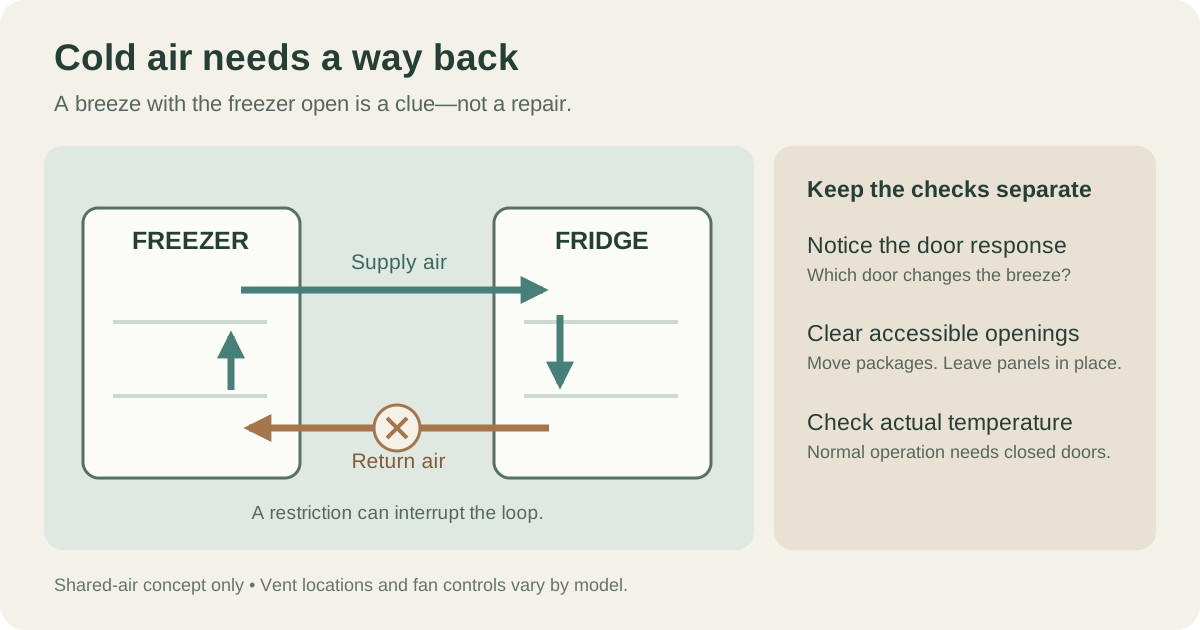
First, identify which airflow changed
This explanation concerns a breeze entering the refrigerator compartment that becomes stronger when the freezer door opens. It is different from a fan that normally pauses when its door opens, or a door that briefly pops open when the other door closes.
Some refrigerators cool the compartments separately. Check your model's airflow layout before applying a shared-air explanation to it. Also identify the opening: on some French-door models, the upper and lower vents on the left wall serve the ice box in the door. The lower opening returns air; an outward breeze is not expected there.
Keep the observation brief. Do not hold a door switch in, remove a cover while the appliance runs, or leave the freezer ajar to preserve the breeze. A change you notice during ordinary door opening is useful information for service; it is not a reason to defeat the controls.
A fully open damper can still leave the refrigerator warm
A damper controls an air passage. It cannot, by itself, establish that air is circulating through the rest of the cabinet.
On a Kenmore 10651163210, the owner cleared ice from a freezer-side opening, then inspected the damper and found it fully open. Cold air still entered the refrigerator only while the freezer door was open. The damper did not change position when that airflow changed.
That sequence matters. It separates “the opening is closed” from “the opening is available but circulation still depends on the door.” Checking the same flap again would not answer what was happening elsewhere in the air path. A return-path check was a reasonable next investigation, but no completed repair was confirmed for that case.
Treat this as a clue, not a parts verdict. The door response alone does not prove an iced return duct, a healthy fan, or a failed damper motor.
When changing every setting achieves nothing
Start with the openings you can reach without dismantling the appliance. Food can cover a vent even when the cabinet does not look especially full.
One Amana bottom-freezer owner tried the available control positions and found the airflow unchanged. The appliance had seven positions on its freezer control and seven on its refrigerator airflow control. Moving food off an opening at the lower shelf then restored operation.
The exact model was not confirmed. Neither that vent location nor the seven-position controls should be assumed on yours. The useful sequence is that changing the settings failed, while moving a physical obstruction worked.
This gives you a practical first distinction: after moving packages away from the accessible openings, does the refrigerator cool with both doors properly shut? Check with a thermometer. If the only improvement is still a breeze with the freezer open, the original problem remains.
When opening the flap does not restore cooling
A second case shows why this symptom cannot settle the choice between a duct problem and a fan problem.
A Maytag M1TXEMMWS02 had a freezer reading of about 1°F while the refrigerator stayed around 45°F, including a reading taken from a glass of water after 12 hours. The owner had moved an obstructing flap fully open and attempted a five-hour thaw, but airflow into the refrigerator remained weak. Opening the freezer door made it slightly stronger.
The owner then ordered a fan. A successful replacement was not confirmed.
Those observations support a limited conclusion: opening the flap and the initial thaw attempt had not restored cooling. They do not establish that every hidden passage was free of ice, and a fan visibly turning is not a measurement of its performance. An inspection needs to distinguish those possibilities before assigning the failure to a component.
The five-hour interval belongs to that unsuccessful attempt; it is not a recommended thaw time. Likewise, 45°F is not an acceptable refrigerator storage target. Keep the refrigerator at 40°F or below, and protect perishable food while a warm appliance is being assessed.
A clear-looking opening can hide an obstruction
A view through a grille only shows the part of the passage you can see.
In another door-dependent airflow case, checks of the damper, fan and condenser had not identified the problem. A visual check also missed ice in the return path. After the ice was cleared, operation resumed. The exact model and a long-term temperature record were not available, so this establishes a reported improvement rather than a guaranteed lasting repair.
It also explains why “I looked and saw no ice” needs a location attached to it. Looking at the supply opening is different from confirming the entire return passage is clear.
Keep internal ice removal and component inspection within the procedure for your exact model or a technician's work. Do not chip at hidden passages or use a hair dryer inside the cabinet. A previously attempted method is not automatically a safe instruction to repeat.
If thawing helps, watch what happens next
Restored airflow can be temporary. On a Whirlpool side-by-side with the same open-freezer-door symptom, thawing helped for about one week before the problem returned. Ice and condensation were also present. The exact model and failed component were not confirmed.
That history changes the next question from “can air get through after thawing?” to “why does the restriction return?” Repeatedly obtaining the same short-lived result is useful evidence for an inspection, not proof that another thaw will finish the repair.
Give the technician the sequence, not a guessed part
Use the branch that matches what actually happened:
| What you observed or already tried | What still needs checking |
|---|---|
| The damper stayed open while airflow changed with the freezer door | The remainder of the circulation path and the fan's operation |
| Control changes did nothing; moving a package restored operation | Whether temperatures remain correct with both doors closed |
| A flap was opened and a thaw attempted, but the refrigerator stayed warm | Hidden restrictions, fan performance and the model's actual airflow layout |
| Airflow returned after clearing ice, then failed again | Why ice or another restriction is recurring |
For this particular complaint, the useful service note is specific: which door changes the breeze, which opening you felt, the actual compartment temperatures, and what each earlier attempt changed. Include whether the damper's position stayed the same if that was already established during an inspection. There is no need to repeat an internal check yourself.
For broader temperature differences without a door-dependent breeze, use the cold-freezer, warm-refrigerator guide. If the main symptom is sound disappearing when a door opens, use the door-related fan-noise guide. Here, recovery means the refrigerator maintains its temperature with the doors shut—not just that you can feel cold air while one is open.