If your refrigerator is not cooling after compressor replacement, ask the installer to recheck the completed repair if measured temperatures stay high, only one compartment recovers, or cooling soon fails again. A new compressor does not rule out a remaining refrigerant-flow problem or an installation or control issue. Follow the recovery instructions for your model, but report a stalled temperature trend instead of repeatedly starting another waiting period.
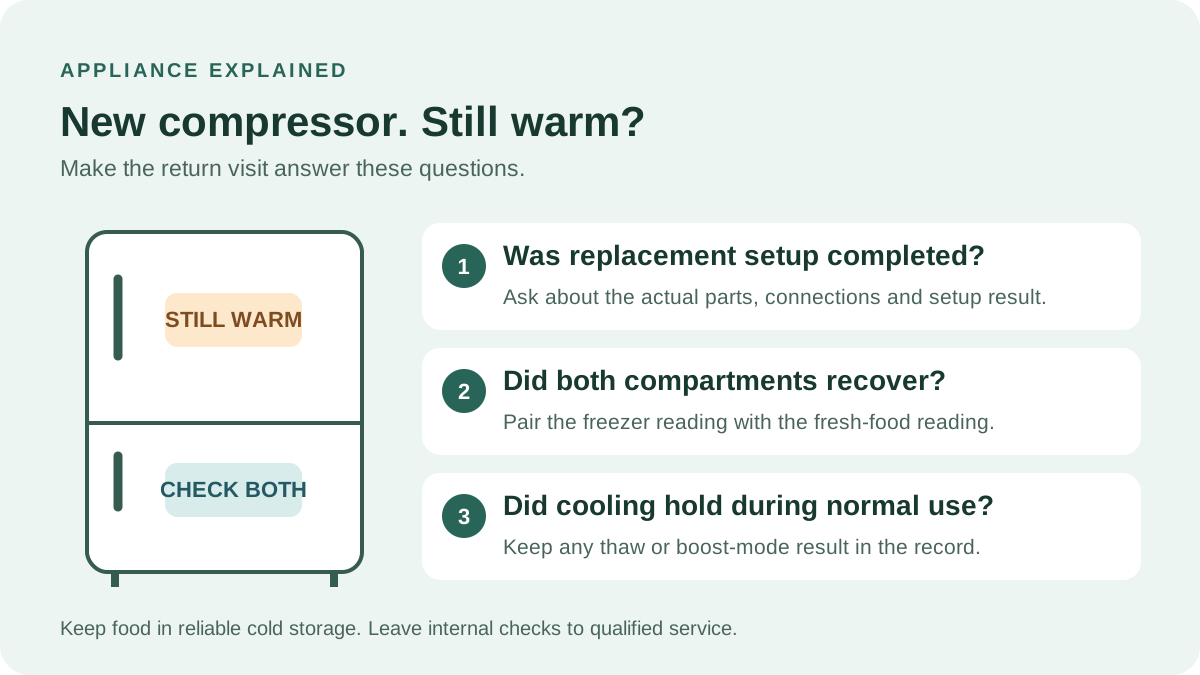
Measure recovery before putting food back
Use an appliance thermometer in each compartment. Keep refrigerated perishables at 40°F (4°C) or below, with the freezer at 0°F (-18°C). Use other reliable cold storage while this appliance remains too warm. A fresh batch of ice or cold-feeling air is not a substitute for those readings.
Write down when the repair ended and whether either compartment actually reached its normal temperature. A brief rise after opening a door is different from a compartment that remains warm with the doors shut. Avoid changing settings and adding a large load together while checking recovery; otherwise, the next reading becomes harder to interpret.
There is no single waiting time here that can certify every compressor repair. Ask the installer what recovery to expect for this model and when to call back if it does not happen.
The compressor changed, but a flow problem remained
In one Whirlpool repair, the freezer felt cold about 30 hours after compressor replacement, yet an ice pack had not frozen and a drink in the refrigerator was barely cooler than the room. The condenser fan was running. A return visit found frost concentrated at the beginning of the evaporator rather than across it. After further sealed-system work addressing a suspected restriction, normal cooling returned.
That outcome supports requesting a complete cooling-system assessment after an unsuccessful compressor change. It does not prove that every similar failure is a restriction, or establish what caused that particular restriction. The explanation about the old compressor's oil remained uncertain.
Ask what evidence was collected after the replacement to show that the system was moving refrigerant and removing heat correctly. Keep covers in place: inspecting hidden coils, checking pressures and handling refrigerant are service work, not the next household troubleshooting step.
“An update was done” did not settle whether setup succeeded
An LG refrigerator remained around 80°F after a compressor change. The repair had also included new refrigerant, a filter-drier and an attempted software update, and the fan was running. On the return visit, the technician reportedly found that the existing board would not accept the update required for the replacement compressor. A board replacement was arranged; the available account did not establish the final cooling result.
This changes the question to ask. Instead of stopping at whether someone connected an updating tool, ask whether the required setup completed successfully for the installed compressor and control board. Have the installer check the actual part combination. An update attempt and a confirmed successful update are different entries on a service record.
Do not assume your refrigerator needs new software just because this one did. The requirement depends on the replacement and the appliance.
A software label and a connection problem can be separate questions
A repair involving an LG LFXS26596S stalled over whether a nonworking replacement compressor was defective or needed its marked software update. A separate installation experience exposed a different issue: the replacement connector had been placed in the old compressor's orientation. It did not pump in that arrangement; after the connection was corrected for the replacement, it began pumping and working.
Those were separate experiences, not one continuous repair. The successful connection correction does not establish the cause of the first refrigerator's failure. It does show why “the old plug went back the same way” is not sufficient confirmation that a replacement was installed correctly.
If the repair stopped at a dispute over software, ask the technician to check both the required setup and the replacement-specific connection instructions before condemning another compressor. Do not turn, swap or test the connector yourself. No pin arrangement from this account should be applied to your appliance.
The freezer recovered, but thawing still left the refrigerator warm
Another LFXS26596S had a different result after compressor replacement: the freezer reached -4°F, while the fresh-food compartment would not drop below 48°F. A frozen air return was suspected. After a 20-hour thaw followed by 12 hours running, the owner measured the freezer at 4°F and the refrigerator still at 48°F. No successful final repair was established.
The thaw was an actual attempted remedy, and its result matters. The fresh-food reading remained unchanged even though the freezer's reading had changed. That is more useful for a callback than saying the new compressor “works” or “doesn't work.”
Keep the two readings together and tell service that thawing was already tried. Do not repeat that duration as a universal instruction, or conclude from this history that the fan, damper or new compressor must be defective. If your symptom is also a cold freezer with a warm refrigerator, record it as a separate unresolved result of the repair.
A colder boost-mode reading did not survive ordinary loading
In a further LG repair, compressor replacement initially seemed successful, but the refrigerator struggled to recover after use. A temporary maximum-cooling mode brought a reading near 34°F. After roughly 7–8 pounds of vegetables were added, some already chilled, the reading was 48°F about two and a half hours later. The owner also described high readings after hours with the doors closed.
At the follow-up visit, the technician reportedly considered the freezer satisfactory and ordered a fresh-food evaporator. The completed evaporator repair and its final result were not established. Suggestions of a leak were not a confirmed diagnosis.
A temporary boost helped in this case, but it did not establish dependable recovery during ordinary use. If you have already tried a boost setting, report that sequence along with what was loaded and when. Do not deliberately add food to a warm refrigerator as a stress test. Ask whether the unresolved fresh-food performance has been assessed separately from the freezer.
What to put on the service callback
Keep the original repair number and add the information that identifies the unfinished part of the job:
| What remains unresolved | What to ask the installer to verify |
|---|---|
| Neither compartment cooled after replacement | The completed installation, required setup and cooling-system performance—not just that the compressor makes a sound |
| An update was attempted, but cooling never followed | Whether the correct update completed successfully for the installed board and compressor |
| The freezer cooled but fresh food stayed warm | The two measured temperatures and the outcome of any thaw already performed |
| Boost mode helped, but temperatures rose again in normal use | Which compartment failed to recover, with the load and door-opening timing kept in the record |
Photograph the model label and keep replacement part numbers from the invoice or packaging. You do not need to expose the compressor to get this information. Ask for the callback findings and the next recovery check in writing, so another waiting period has a clear endpoint.
A satisfactory result needs to include the fresh-food compartment as well as the freezer. When the repairer says the work is finished, confirm both with measurements before relying on the appliance for food storage again.