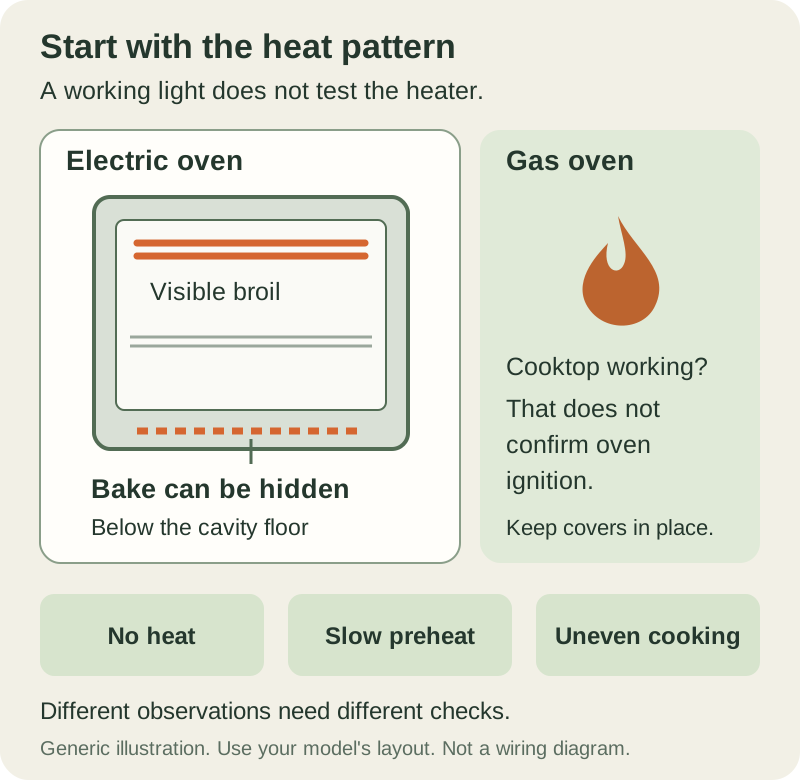
If your oven is not heating, confirm that a cooking cycle actually started, then separate a completely cold oven from one that heats slowly or cooks unevenly. An electric oven can have working lights without a working heating circuit; a gas cooktop can work while the oven's ignition system does not. Bake and Broil behaving differently helps narrow the problem, but it does not identify a replacement part.
Stop the test if there is a safety warning
If you smell gas, leave the area and call the gas supplier or emergency service from a safe location. Do not operate electrical switches or try another ignition cycle. Smoke from an electrical fault, a scorched connection, or a breaker that trips again also calls for service rather than repeated resets.
The checks below stay outside service panels. Do not remove the oven floor, test live terminals, bypass a fuse or alter a gas connection. A wall oven and a freestanding range can have different access and supply arrangements.
Check what the controls are waiting for
Select the intended cooking mode and temperature, then press the required Start control. A kitchen timer counting down does not necessarily mean the oven is cooking. Look for a scheduled start, a control lock or a demonstration setting before assuming the heater failed. Use the instructions for your control panel instead of trying button combinations for another oven.
There are useful brand differences. On the LG gas ranges covered by its heating guidance, setting the temperature without pressing Start within 25 seconds cancels the entry. On applicable Whirlpool electric ranges, Demo Mode lets the controls respond without producing heat. Those are control checks, not reasons to order an igniter or element.
A quiet Sabbath display is a different situation
On applicable Whirlpool ovens, Sabbath Mode can keep Bake running while suppressing tones and temperature changes on the display. Other cooking modes are unavailable. An unchanging display or a Broil command that is unavailable therefore does not, by itself, show that the oven has lost all heat.
Check the mode shown and the instructions for that model. Do not treat Sabbath Mode as another name for Demo Mode: one can maintain baking, while the other is used to demonstrate controls without heating.
Electric oven: lights do not clear the power supply
A lit clock only confirms that part of the appliance has power. It does not establish that the heating circuit has the supply it needs. Check the identified oven circuit using your manual's permitted breaker procedure. If it trips again, stop.
If the problem began immediately after installation, give that timing to the installer. Leave supply verification, terminal inspection and internal testing to an electrician or appliance technician. Do not pull out a heavy range just to reach a connection.
Gas oven: compare oven ignition with the cooktop
Record whether the cooktop was working normally when the oven failed. Working surface burners do not establish that the oven's burner is being supplied and ignited correctly. Gas ovens also need electrical power for their controls and ignition systems.
A glowing hot-surface igniter is not a complete test of the ignition circuit. It may glow without the burner lighting; other designs use spark ignition. Report what you can observe during normal operation without removing covers, including any error code. Do not copy a glow-time rule from a different ignition system.
After a move or installation, ask the installer to check the oven's gas-supply arrangement if normal control checks do not restore heating. Do not start turning unfamiliar valves or repeatedly attempting to light a burner.
Broil works, but Bake stays cold
With no safety warning present, note which ordinary cooking mode fails. If the oven heats on Broil but not Bake, the fault is more specific than an appliance that has no heat in either mode. It still could involve the bake element or igniter, its connections, or the controls that supply it.
For an electric oven, a visible broken element is useful evidence. An intact-looking element is not proof that the circuit is healthy. Likewise, working Broil does not prove every output of a control board is working. Tell the technician which mode works; do not translate that observation straight into a parts order.
No visible lower element does not mean it is missing
Some electric ovens place the bake element below the cavity floor. You cannot assess that element's glow through the door. A visible upper element and a smooth oven floor are compatible with a hidden-bake design.
Look up the cavity layout for your model. Leave the floor in place. Hidden-bake ovens can also take longer to preheat than exposed-element designs, so a timing expectation carried over from an older oven can be misleading.
Slow preheating needs a different check
Keep the door closed and compare the result with the preheat guidance for the selected mode and model. Remove unused trays and racks while the oven is cool if its instructions recommend doing so. Do not judge a large cavity, hidden-bake design and smaller exposed-element oven by one universal countdown.
For applicable Whirlpool wall ovens, an approved 208-volt installation can take longer to preheat than a 240-volt installation, without changing cooking performance once the oven is hot. This is an installation detail for the professional to verify against the rating and instructions. It is not a reason to guess the supply from your building type or accept an oven that never gets hot.
One thermometer reading is not a calibration verdict
An oven's heater cycles while controlling temperature. A slow-response thermometer can give a misleading snapshot during that cycle. On Whirlpool models with this warning in their operating instructions, changing calibration to cancel that single reading can create a new problem.
Check your exact manual's method for evaluating baking results before changing the offset. A repeatable problem after complete preheating is more useful than a reading taken just after opening the door. Record the mode, rack position, set temperature and what went wrong with the food. A completely cold oven needs its heating failure investigated; a calibration offset is not a way to restore an inactive heat source.
Heat escapes, or food browns unevenly
With the oven cool, check for a rack or tray preventing the door from closing normally. Inspect the visible seal for damage. Do not force a stuck self-clean latch.
Crowded pans and covered airflow paths can change cooking results even when heat is being produced. Keep pans separated as your manual specifies. Do not line the entire rack or oven bottom with foil. This branch concerns heat distribution and retention; it does not explain every oven that remains cold from the start.
A new part did not always finish the repair
These individual repair outcomes illustrate why a failed first attempt matters. They are not diagnoses for every oven bearing the same brand or model number.
| Appliance and observed problem | What did not resolve it | What happened next |
|---|---|---|
| Samsung NE63A6511SS/AA: a loud pop and a damaged broil element, followed by no oven heat | Replacing the element and resetting power left the heating modes unavailable | The owner later reported that a control-board replacement restored operation |
| Whirlpool WFE715H0ES0: heating stopped during use; the hidden bake element had broken | A new bake element did not restore normal heating | The owner reported that replacing the board fixed the problem |
| Frigidaire FGGF3054MFG gas range: the oven still would not heat after an igniter change | Installing a replacement igniter had not restored operation | The owner found the new igniter had not been plugged in; after correcting that omission, the oven worked |
| GE Jks06g0j3: Bake worked but Broil remained cold | Another replacement broil element did not restore Broil | The owner then reported an inadequate supply measurement at that element; the account did not establish a completed repair |
The Samsung and Whirlpool outcomes do not justify buying a board first. The Frigidaire outcome does not prove a new igniter is always good. They show why a return visit should include confirmation that the repair was completed and that the affected mode now works. The GE example also shows the difference between narrowing a fault and actually fixing it. Internal connections and energized measurements belong with the repair professional.
Give the repair visit a specific starting point
Before booking, collect the model number, fuel type and exact error text, if any. Add which modes failed, whether the cooktop still worked, and whether the trouble started after installation, self-cleaning or a repair. List parts already changed and the result of each attempt.
Ask for the failed mode to be checked after the work is finished. A working clock, an installed new part or a brief glow is less useful than confirming that the oven can complete the heating operation that failed.
Official references
- Whirlpool: heating problems and service boundaries
- LG: gas-range heating and the Start control
- Whirlpool: powered-on electric oven checks
- Whirlpool: Sabbath Mode behavior
- Whirlpool: wall-oven preheating
- Whirlpool: temperature, cookware and calibration
- Whirlpool operating instructions: temperature cycling and gas safety
Use the operating instructions supplied for your model; the linked manual does not apply to every oven. This article provides editorial guidance, not an inspection of your appliance.