If your washing machine is not draining, look for standing water before blaming the pump. With water still in the tub, stop adding cycles, check the visible drain hose, and use only your model's permitted emergency-drain and filter access. Wet clothes in an otherwise empty tub may indicate a spin problem. A clean filter or a humming pump does not prove that the whole drain system works.
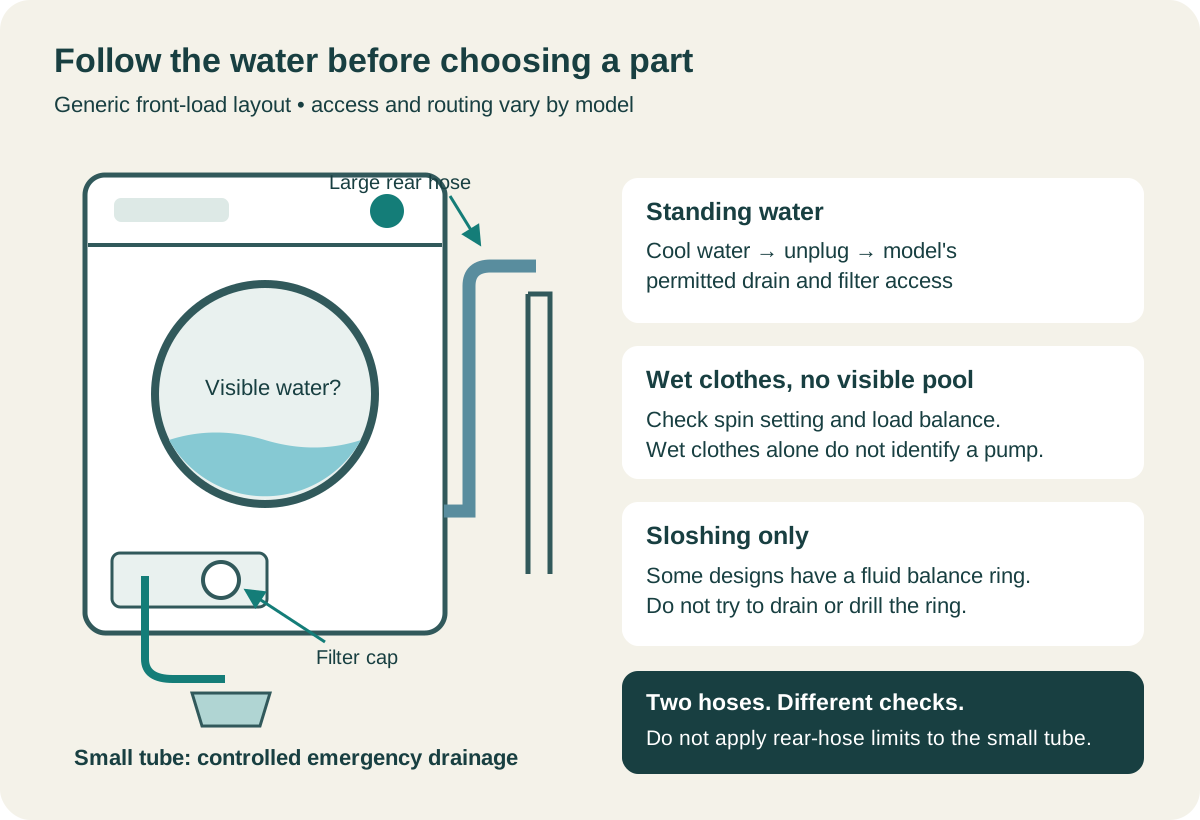
Is water still in the tub, or are the clothes just wet?
Wait for movement to stop and use the window or a normally unlocked lid to check. Do not force a locked door. A pool of water calls for the drainage checks below. Clothes that are soaked without a visible pool need a different starting point: the selected spin setting, load balance and whether the basket reached spin speed.
For that second pattern, use the washer not spinning guide. Repeating its balance checks here would not help you empty a genuinely full tub.
Sloshing with no visible water can be normal
On Whirlpool stacked laundry-center washers, liquid inside the balance ring can make a water sound even when the tub has drained. The ring's fluid helps stabilize the basket. Hearing it while moving the basket is not, by itself, evidence of trapped wash water.
This is a design-specific distinction, not a diagnosis for every washer. Do not try to empty, drill or remove a balance ring. Visible standing water still needs attention; the ring explanation does not make a full tub normal.
Cool the water and isolate power before opening drain access
Hot wash water can burn. After a Samsung Pure Cycle or Sanitize cycle, allow approximately an hour for cooling before emergency draining, and do not proceed while the water is still hot. Keep the machine off and unplugged before handling its filter or drain access; close the water supply taps.
If water has reached the socket or plug, do not touch them from a wet floor. Stop and get help. A locked front door may be preventing a flood rather than signaling a broken latch. Never defeat that lock to reach the laundry.
Find the right filter before taking anything apart
An accessible pump filter is not fitted to every washer. Samsung's front-load procedure does not apply to its top loaders, which lack that removable pump filter. Some Whirlpool front loaders place access behind a drawer; other layouts differ.
Locate the emergency-draining section for the exact model. If it requires removing a cabinet panel or tipping a full machine, leave that work to service. Do not treat a filter in a different location as interchangeable with the one shown for your model.
Empty the water before removing the filter
For a washer with an owner-accessible small drain tube, arrange towels and a shallow container first. Release the tube's cap over the container, control the flow, and recap it whenever you need to empty the container. Continue until the water has drained. Do not unscrew the large filter cap while the tub is full.
Then follow the model's filter-removal instructions. Clear accessible debris, clean the filter, and refit it fully. Replace the small tube's cap and secure the tube in its holder. Check the seal and surrounding area for leakage during the model's permitted test. If the filter is stuck, forcing it with tools can turn a drain problem into a leak.
The little emergency tube can kink when pulled too far
On LG front loaders with a small emergency-drain tube, pulling it out too far can bend the tubing inside the cabinet. If visible water remains but that tube produces no flow, gently feed it back about 1 inch to relieve the possible kink. Keep its open end over the container and the washer unplugged.
This concerns the little tube at the front, not the large hose at the back. If water still will not flow, do not assume the tub is empty and remove the filter cap. Stop for model-specific help.
Hose insertion depth is not a universal measurement
A rear hose can be pinched behind the washer, obstructed, or installed incorrectly at the household drain. Check what you can see without pulling a heavy machine across its connections. Keep the standpipe opening from being sealed airtight around the hose.
The permitted insertion depth depends on the appliance. Samsung's US drainage troubleshooting specifies 6–8 inches into the drainpipe. Whirlpool's front-load F9 E1 guidance limits insertion to 4.5 inches. Those are different instructions for different scopes; do not average them or transfer one to the other brand. Use the installation instructions matching your washer for insertion depth and outlet height.
If the standpipe backs up or the connected sink also drains slowly, the household plumbing needs checking. An appliance pump replacement will not clear a blocked house drain.
Leave a Samsung rear hose holder in place
The factory holder and screw that support a Samsung washer's rear drain hose are part of its routing. Do not remove them to straighten the hose or make it reach farther. If that holder is missing, arrange service rather than improvising a new route.
This holder is separate from the open standpipe connection. Keeping the holder intact does not mean sealing the hose into the household drain.
Read the exact code before deciding to wait
The same delay can mean different things on different machines:
| Display and scope | What it tells you | What to do with that information |
|---|---|---|
| LG front-load OE | The washer could not drain | Check the permitted hose/filter route; it is not a command to buy a pump |
| Whirlpool front-load Int | A cycle was paused or cancelled; stopping and draining can take 20–30 minutes | Allow the cancellation process to finish if there is no leak or other hazard |
| Whirlpool front-load F9 E1 | The drain is taking too long, typically more than 8 minutes | Check the model's drain installation and accessible filter; do not treat it as the Int waiting period |
These times describe specific control behavior. They are not a safe waiting rule for a leaking machine, a burning smell or an unrelated error code. Photograph the display before clearing it.
A hum and a clean filter leave questions unanswered
A hum tells you that something is making noise; it does not establish adequate water flow. Likewise, clearing the accessible filter does not inspect every hose, the pump's performance, or the water-level detection system. Excess suds can also interfere with draining, so check for persistent foam and whether you used the detergent type and amount specified for the load.
Once the washer drains normally, follow its cleaning-cycle instructions if detergent buildup needs attention. Do not add another full cleaning cycle to a machine that remains full and cannot empty. Persistent trouble after the permitted checks needs diagnosis, not repeated restarts or an assumed control-board fault.
Similar symptoms have led to different outcomes
These are individual owner-reported sequences, not controlled tests or recommended parts replacements. The model identifies the reported case, not every machine covered by this guide.
| Reported washer or condition | What had not solved it | What happened next |
|---|---|---|
| Whirlpool WTW5057LW, poor draining/spinning after installation | Resets, hose checks and replacement machines had not resolved the household's problem | The owner reported normal operation after changing the standpipe to 40 inches. That case-specific dimension is not a universal installation target |
| LG WM3550HVCA, water remained and the pump hummed | Cleaning the filter and rear hose, then replacing the pump, had not restored drainage | The owner later reported recovery after a Tub Clean cycle, while explicitly remaining unsure of the cause |
| GE front loader, intermittent no-drain with a clean filter | Filter/hose checks and an apparent improvement after a cleaning cycle did not last | The problem returned; the owner later reported improvement after pump replacement |
| LG WT1101CW, intermittent OE | Cleaning the machine and replacing the pump had not ended the fault | Drainage still varied between none, partial and complete. The available account did not establish a successful final repair |
The useful agreement is limited: a first attempt can fail even when it seemed plausible. The outcomes conflict on which later action helped, and the unresolved case stays unresolved. In the installation case, the repeated failure at the same home was a detail worth investigating. None of these reports proves what is wrong with your washer.
Make the next service visit specific
If water remains after the checks your manual permits, leave the next wash unloaded and arrange service. Report whether the failure began after installation, whether the filter was actually blocked, and whether water moves at all during the drain command. Include the exact code and the point in the cycle when it appears.
Tell the technician what changed after each attempt: no change, a brief recovery, or a return of the same fault. If the household drain overflows, describe that separately to a plumber. This separates a drainage-path problem from a spin complaint without asking you to open the cabinet or buy parts on the strength of a noise.